
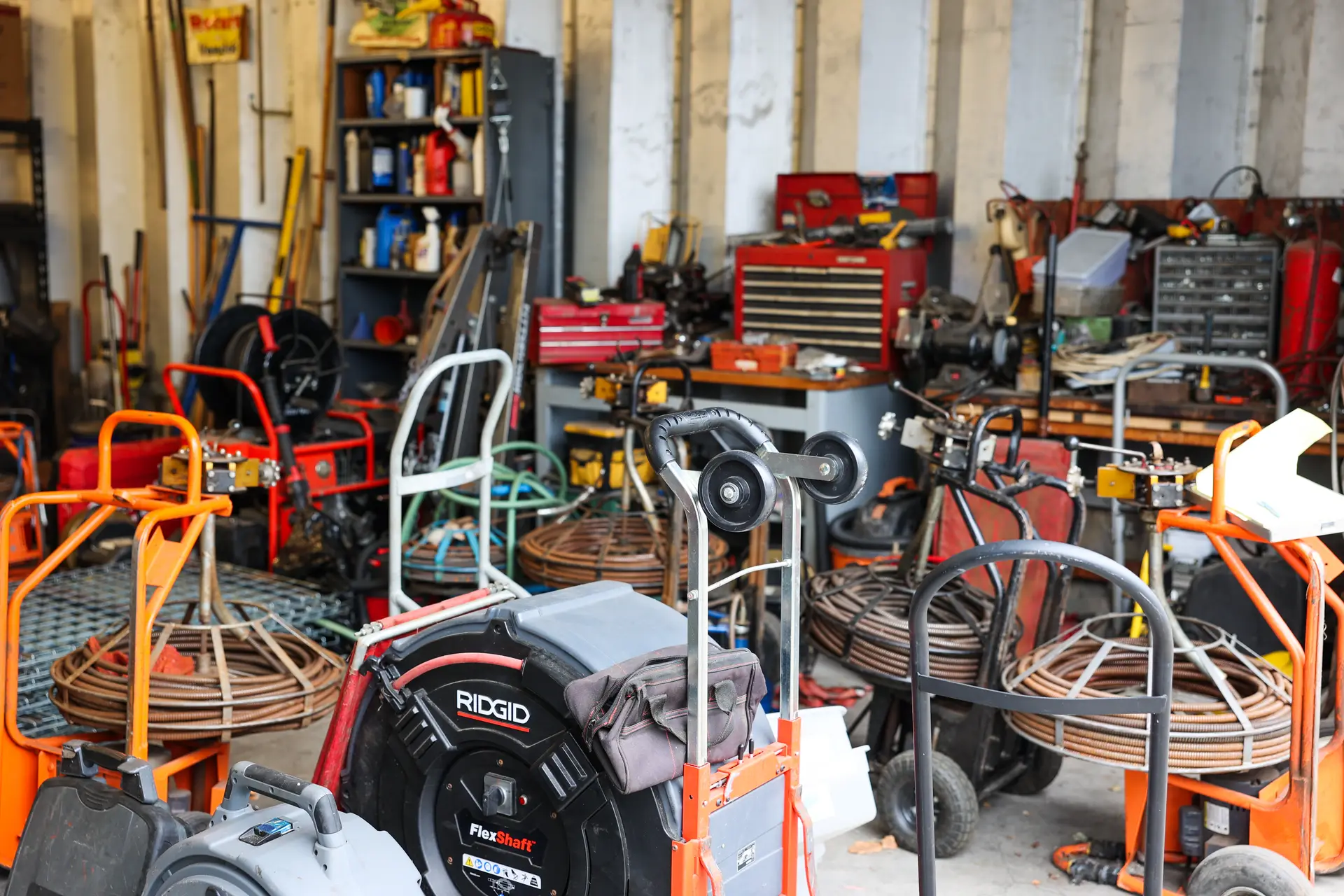
A commercial kitchen produces more grease in a single dinner service than most homes produce in a month, and that grease has to go somewhere. If your restaurant, cafe, or catering kitchen in San Luis Obispo or Santa Maria has dealt with a slow floor drain, a backed up grease trap, or a mysterious sewage smell near the dish pit, hydro jetting is usually the fix that actually solves it instead of just buying a few more weeks.
Commercial kitchens run on a different clock than residential plumbing. A clogged line at home is an inconvenience. A clogged line during a Friday dinner rush is a lost night of revenue, an unhappy health inspector, and potentially a closed dining room. That difference is exactly why commercial kitchen drain maintenance deserves its own conversation, separate from the general homeowner advice most plumbing content is written for.
This article covers why commercial kitchens clog faster than residential lines, how hydro jetting handles grease and food waste differently than snaking, what a service visit looks like for a working kitchen, and how to build a maintenance schedule that keeps a health inspection from turning into a surprise.
In this article, you will learn about:
- Why commercial kitchens clog faster than residential lines
- How hydro jetting clears grease and food waste for good
- What a commercial jetting visit looks like in a working kitchen
- Building a maintenance schedule that prevents surprise backups
Keep reading to find out how a properly maintained line keeps your kitchen open instead of closed for a plumbing emergency.
Why commercial kitchens clog faster than residential lines
A single home might send a modest amount of grease down the drain over the course of a week. A busy restaurant kitchen sends that same amount down the drain in an hour or two, multiplied across every sink, fryer, and dish machine running at once. That volume difference is the entire reason commercial kitchens need a different maintenance approach than a typical house.
Grease behaves predictably once it enters a drain line. It's liquid and mostly invisible going down the pipe, then it cools, thickens, and clings to the inside of the pipe wall as it travels. Over weeks and months, that coating narrows the usable diameter of the line until even a small amount of food debris is enough to cause a full stoppage.
- Fryer oil and rendered fat from cooking equipment
- Dishwashing detergent runoff mixed with food particles
- Starches from pasta, rice, and bread that swell and stick to pipe walls
- Coffee grounds and produce scraps that settle in low points of the line
- Cleaning chemicals that can react with grease buildup over time
A grease trap or interceptor is designed to catch a portion of this before it enters the sewer line, but no trap catches everything, and a trap that isn't serviced on schedule stops doing its job effectively long before it visibly overflows. The scale of the problem nationally backs this up.
The Environmental Protection Agency has reported that grease from restaurants, homes, and industrial sources accounts for 47 percent of all reported sewer blockages nationwide, and a single restaurant can send anywhere from 800 to 17,000 pounds of grease into the sewer system each year if nothing catches it.
This isn't a distant, abstract problem for the Central Coast either. The Nipomo Community Services District, which manages sewer infrastructure right here in San Luis Obispo County, names FOG as one of the leading causes of sewer overflows and blockages the district deals with directly.
Why grease traps alone aren't a complete solution
A grease trap is a mechanical device with a finite capacity, and it only works as well as its maintenance schedule allows. Grease and solids that aren't pumped out on time simply pass through into the line downstream, defeating the entire purpose of having a trap installed.
Even a well maintained trap only intercepts what flows through it directly. Floor drains, dish pit lines, and fixtures that bypass the trap entirely still accumulate grease and food waste along their own pipe walls, which is exactly the kind of buildup a jetting service is built to remove.
- 1Grease trap captures fats, oils, and solids from connected fixtures
- 2Regular pump outs remove accumulated material before it reaches capacity
- 3Lines downstream of the trap still need periodic jetting regardless of trap maintenance
- 4Mop sinks or floor drains not connected to the trap need direct attention
The health code angle most kitchens don't think about until it's a problem
Local health departments inspect for more than food handling. A backed up floor drain, standing water near a prep area, or a sewage odor in the kitchen are all things an inspector notices immediately, and they can turn a routine inspection into a corrective action notice or a temporary closure.
Grease management is frequently part of a municipal or county code requirement for food service establishments, not just good practice. Staying ahead of buildup with routine jetting is often the difference between passing an inspection without incident and explaining a plumbing problem to a health inspector on the spot.
- A slow or backed up floor drain during an inspection
- Standing water or a wet floor near cooking or prep stations
- Any noticeable sewage or grease odor in food handling areas
- Evidence of a recent grease trap overflow or bypass
Local ordinances often require documented FOG management
Many California municipalities and counties, San Luis Obispo and Santa Maria included, require food service establishments to maintain a grease control device and keep some form of service record for it. That requirement usually comes from the local sewer use ordinance rather than the health code directly, which is part of why kitchen managers sometimes miss it.
Compliance in this context typically means installing an approved grease interceptor sized correctly for the kitchen's volume, servicing it on a documented schedule, and keeping records available for inspection on request. A kitchen that treats this as a routine part of operations rarely runs into trouble over it.
- Confirm the grease control device on site meets local sizing requirements
- Keep dated service records for both the trap and any jetting performed downstream
- Know which department, health or public works, actually enforces FOG requirements locally
- Ask a plumber familiar with commercial accounts if the current setup meets code
How hydro jetting clears grease and food waste for good
Hydro jetting uses high pressure water, often reaching several thousand pounds per square inch depending on the equipment and the line, to scour the entire inside diameter of a pipe rather than punching a narrow channel through the middle of a blockage. For a commercial kitchen line coated in hardened grease, that distinction is the whole reason jetting works where a cable snake only offers a temporary fix.
A cable snake breaks through whatever is blocking the immediate path of water flow. It's fast and useful for a fresh, isolated clog, but it does very little to the grease still clinging to the pipe walls on either side of that cleared channel. Within a matter of weeks, that residual coating regrows across the same spot and the exact same call comes in again.
Jetting removes the coating itself, not just a path through it. The high pressure water strips grease, food debris, and mineral buildup from the full circumference of the pipe, which is why a properly jetted commercial line holds up dramatically longer between service calls than one that has only ever been snaked.
- 1Camera inspection confirms the pipe's condition and the extent of grease buildup
- 2Jetting hose feeds through the line from the nearest accessible cleanout
- 3High pressure water strips buildup from the entire pipe wall, not just the center
- 4A follow up camera pass confirms the wall is actually clean before the technician leaves
Snaking still has its place in a commercial setting
None of this means snaking has no role in a commercial kitchen. A fresh, isolated blockage, like a utensil that made it into a disposal line or a sudden clog from a specific incident, is often still best handled with a snake first, especially if the rest of the line has a recent jetting history and isn't the likely source of the problem.
The distinction that matters is whether the issue is a one time event or a symptom of ongoing buildup. A kitchen with a documented jetting schedule and a sudden, isolated clog is a different situation than a kitchen calling in the same complaint every few weeks despite repeated snaking visits.
- A single utensil or object causing an isolated blockage: snaking first is reasonable
- A recurring clog on the same line despite recent service: points to buildup, and jetting is the fix
- A line that has never been jetted and is showing slow drainage: a camera inspection should come first
Why the wrong pressure setting can cause real damage
Not every commercial line can handle the same jetting pressure, and using the wrong setting on an older or more fragile pipe can turn a routine maintenance visit into an expensive repair. This is exactly why a camera inspection always comes before the water turns on, not as an extra step but as a genuine safety check.
Older buildings on the Central Coast, particularly in downtown San Luis Obispo, sometimes still have aging clay or cast iron lines that require a more conservative pressure setting than a newer PVC installation. A cracked or offset section usually needs targeted pipe repair rather than another jetting visit, and a technician who skips the inspection and jets blind is taking a real risk with a client's plumbing system.
What separates a commercial-grade jetting service from a residential one
Commercial jetting equipment generally needs more capacity than a typical residential setup, since restaurant lines run longer, wider, and with heavier buildup than a house's drain system. A technician working commercial accounts regularly develops a feel for grease specifically that a residential-only background doesn't build the same way.
Experience with grease traps, interceptor sizing, and the specific way commercial kitchens generate buildup matters as much as the jetting equipment itself. A company that primarily handles residential work but occasionally takes a commercial job may not have that specialized experience, even with the right machine on the truck.
- Equipment rated for longer commercial line runs and heavier buildup
- Familiarity with grease trap and interceptor systems specifically
- Experience scheduling around a working kitchen's actual hours
- A track record with other local restaurants and food service accounts
What a commercial jetting visit looks like in a working kitchen
Scheduling matters more for a commercial kitchen than it does for a typical home, since a jetting visit that disrupts service during peak hours creates its own kind of costly problem. A good technician works around a kitchen's actual operating hours rather than treating every job the same way.
Most commercial visits happen before opening, after closing, or during a documented slow window that the kitchen manager identifies in advance. That scheduling flexibility is part of what separates a plumber who understands commercial kitchens from one who is only used to residential work.
- 1Coordinate timing around the kitchen's slow hours or closed periods
- 2Camera inspection to confirm pipe condition and locate the worst buildup
- 3Jetting pass through the affected line, working from the accessible cleanout
- 4Follow up camera confirmation that the pipe wall is genuinely clear
Working around a kitchen that can't fully shut down
Some kitchens, particularly those with a bar or a limited late night menu, never have a truly closed window. In those cases, a technician has to plan around partial access, working on one line at a time while other fixtures stay in limited use.
Communication with kitchen management before the visit matters here more than almost anything else. Knowing which fixtures need to stay operational, where the grease trap access point is located, and what time window is realistically available lets the job get done without creating a bigger disruption than the clog itself would have.
- Confirm which lines can be fully shut down versus which need to stay partially active
- Identify the grease trap and cleanout locations in advance to avoid delays on site
- Plan for containment, since a commercial line can surface more debris than a residential one
- Schedule a camera follow up for larger kitchens with multiple affected lines
What kitchen staff can expect during the visit
A jetting visit in a commercial kitchen is louder and more visible than routine maintenance usually is, mostly due to the size of the equipment and the amount of hose involved for a larger commercial line. Staff should expect some noise and a visible setup near the affected drain or cleanout.
Debris and water can surface at the access point during active jetting, particularly on a line with heavy buildup. An experienced commercial technician manages this with proper containment, but kitchen staff should expect the area around the cleanout to be part of the working zone for the duration of the visit.
Why every truck being ready matters for commercial accounts
A commercial jetting call that gets delayed because the technician has to go back for different equipment costs a kitchen real time, especially when the job was scheduled around a narrow closed window. A company where every truck carries the jetter needed for the job avoids that entire category of delay.
This matters more for commercial accounts than residential ones simply because the scheduling window is tighter. A homeowner can usually work around a rescheduled appointment. A kitchen manager who cleared a two hour window before opening cannot.
- Equipment readiness reduces the risk of a job running past the scheduled window
- A single visit that handles both inspection and jetting avoids a second appointment
- Reliable timing protects a kitchen's actual operating hours
Building a maintenance schedule that prevents surprise backups
A one time jetting service solves an existing problem, but a maintenance schedule is what keeps that problem from coming back. For a commercial kitchen, the right interval depends heavily on volume, menu type, and how much grease the operation generates on a typical week.
A high volume kitchen with a fryer program and heavy dish traffic needs a noticeably shorter interval than a lower volume cafe or a kitchen with a lighter, less grease intensive menu. Getting that interval right is what separates a kitchen that never has a surprise backup from one that calls in every few months for the same emergency.
- High volume kitchens with fryers and heavy grease output: shorter jetting intervals, often quarterly
- Moderate volume kitchens: typically a semi-annual schedule works well
- Lower volume cafes or kitchens with lighter menus: annual jetting may be sufficient
- Any kitchen with a documented history of grease related backups: schedule based on that history rather than assumptions
Coordinating jetting with grease trap service
Jetting and grease trap pumping address two different parts of the same system, and coordinating them on a complementary schedule catches problems neither service alone would. A trap that's pumped regularly but never has its downstream line jetted still accumulates buildup in the pipe itself, and a jetted line feeding into a neglected trap just pushes the problem back upstream.
The most effective commercial maintenance plans treat these as paired services rather than separate line items scheduled independently of each other. Coordinating both around the same visit, or on a staggered but connected schedule, gives a kitchen manager one less thing to track.
- 1Establish a grease trap pump out schedule based on trap size and kitchen volume
- 2Schedule jetting for the lines downstream of the trap on a complementary interval
- 3Use camera inspection results to adjust either schedule if buildup is accumulating faster than expected
- 4Keep documentation of both services for health inspection purposes
What documentation matters for health inspections
Many municipalities and counties expect food service establishments to show some record of grease management, and a documented jetting and pump out history is exactly the kind of paper trail that satisfies that expectation during an inspection.
Keeping simple records of service dates, what was found during camera inspections, and any corrective action taken turns a potential inspection headache into a quick, uneventful conversation. A kitchen that can produce this history on request looks meaningfully more prepared than one that can only say it "probably" gets serviced regularly.
Building the relationship before the emergency happens
The best time to establish a maintenance relationship with a plumbing company is before a Friday night backup, not during one. A kitchen that already has a documented schedule and a known technician gets priority attention when something unexpected does come up, simply because the history already exists.
Waiting until an emergency to find a commercial plumber usually means taking whoever answers the phone first, with no context on the kitchen's specific lines, trap sizing, or history. A standing maintenance relationship changes that dynamic entirely.
- An established schedule means less guesswork during an actual emergency
- A known service history helps a technician diagnose problems faster
- Priority scheduling often follows an existing maintenance relationship
Conclusion
Commercial kitchens deal with a volume and type of buildup that residential plumbing simply doesn't see, and treating a restaurant's drain lines with the same maintenance approach as a house is how kitchens end up with surprise backups during a dinner rush. Hydro jetting, paired with a grease trap schedule that actually matches your kitchen's volume, is what keeps that from happening.
A slow floor drain, a backed up trap, or a lingering odor near the dish pit are all worth addressing before they turn into a closed dining room or a failed inspection. The earlier a camera inspection happens, the more options stay on the table.
If your San Luis Obispo or Santa Maria restaurant or commercial kitchen needs a jetting schedule built around your actual volume, Drain Doctors can walk your line, show you exactly what's happening inside it, and build a maintenance plan that fits how your kitchen runs. Reach out to Drain Doctors to get started.