
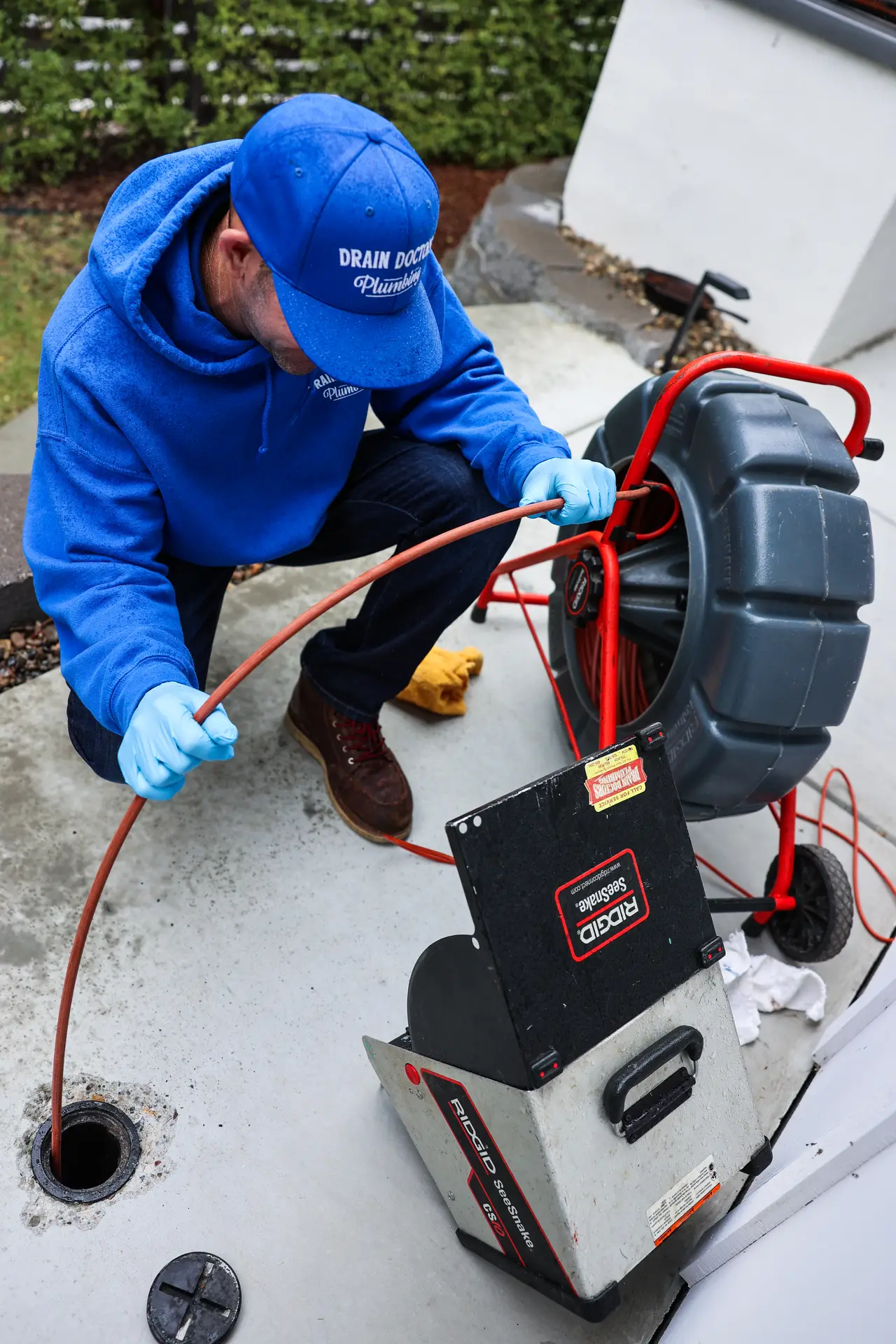
Three findings show up on more San Luis Obispo County sewer camera runs than anything else: root intrusion, bellies, and breaks. Between them, they explain most of the slow drains, backups, and mystery yard smells that send homeowners looking for a plumber in the first place.
Each one looks different on screen, comes from a different cause, and calls for a different fix. Roots are a living, growing problem. A belly is a structural sag that traps whatever passes through it. A break is physical damage to the pipe wall itself, sometimes small, sometimes not. Lumping them together as "sewer pipe problems" misses what actually matters, which is figuring out which one you're dealing with before deciding what to do about it.
This article walks through all three in plain terms, what the camera actually shows when each one is present, and how a technician decides whether a finding needs immediate attention or can wait. None of it requires a plumbing background to follow. It just requires knowing what to look for.
A sewer camera inspection is the only reliable way to tell these three apart, since surface symptoms like slow drains can point to any of them, or all three at once.
In this article, you will learn about:
- The three problems that show up on almost every camera run
- Root intrusion, how it starts and how it spreads
- Bellies, the sag that traps everything that passes through
- Breaks and collapses, the findings that change the conversation
Keep reading to find out how to tell these three apart on your own inspection report and what each one actually means for your pipe.
The three problems that show up on almost every camera run
Anyone who's watched sewer camera footage for the first time notices the same thing: the screen doesn't announce what it's showing you. A tangle of roots, a low spot holding standing water, and a hairline crack in aged clay pipe all look like variations of the same murky, unfamiliar picture unless you know what you're looking at.
Technicians read that footage against a defect vocabulary that separates these findings by cause and severity, not just appearance. Understanding that vocabulary is what turns a confusing video into an actual answer about what's happening under your yard.
Older coastal neighborhoods in places like Cayucos tend to show this trio of findings more often than newer inland construction, simply because the pipe and the trees around it have both had more time to age.
The three categories below cover the overwhelming majority of what shows up on a residential lateral inspection in this part of California, and knowing the difference between them changes what a reasonable next step actually looks like.
- Root intrusion: living roots that have grown into the pipe through an existing crack or joint.
- A belly: a sunken, poorly graded section that traps water and solids instead of draining them away.
- A break or crack: physical damage to the pipe wall itself, ranging from minor to a full structural failure.
Root intrusion in plain terms
Root intrusion happens when a tree or shrub root finds its way into the pipe through an existing crack, a loose joint, or a gap where the pipe material has started to deteriorate. Once inside, the root keeps growing, because the pipe interior offers exactly what roots are looking for: moisture and nutrients, in a steady, reliable supply.
On camera, root intrusion looks like exactly what it is: strands or a dense mass of roots reaching into the pipe interior, sometimes at a single joint, sometimes spread across several feet of line. It's the most common finding on older Central Coast properties with mature trees nearby.
What a bellied pipe actually looks like
A belly, sometimes called a sag, is a section of pipe that has sunk below its intended grade, usually from soil settling, poor original installation, or ground movement over time. On camera, it shows up as a section where water pools and sits rather than draining cleanly behind the camera head.
That standing water is the tell. A properly graded pipe drains completely behind the camera as it moves. A bellied section holds a visible pool, and that pool is what causes trouble long after the camera crew has left, since anything moving through the line settles there instead of continuing on.
Breaks, cracks, and the difference between them
A crack is a fracture in the pipe wall that hasn't fully separated the material, while a break is more advanced damage where a section has actually come apart or collapsed inward. Both let groundwater in and wastewater out, but a break is generally the more urgent of the two.
On camera, a hairline crack might look like a thin dark line running along the pipe wall, easy to miss if you're not looking for it. A break is unmistakable: a visibly deformed or collapsed section where the pipe's shape has changed, sometimes with soil or debris intruding into the interior.
Root intrusion: how it starts and how it spreads
Root intrusion is worth its own closer look because it's genuinely the most common finding on Central Coast sewer cameras, and because it behaves differently than the other two categories. Roots don't just sit there once they're in. They keep growing, and that growth is what turns a minor finding into a major one if it goes unaddressed.
According to the U.S. Forest Service, roots are responsible for more than 50 percent of all sewer blockages nationwide, which makes root intrusion less of an occasional surprise and more of a near-certainty for any property with mature trees near the lateral route.
Understanding why roots end up in a sewer line, and how the problem escalates over time, makes it easier to judge whether a finding on your own inspection report is minor or worth acting on quickly.
Why roots find sewer pipe in the first place
Roots grow toward moisture and nutrients, and a sewer lateral running several feet underground offers a steady, reliable source of both, especially compared to whatever moisture a tree can find in dry Central Coast summers. That's why root intrusion clusters so heavily around mature oaks, sycamores, and other established trees.
That pattern shows up clearly in tree-heavy communities like Templeton, where mature oak canopies often sit close to older lateral routes that were installed long before anyone was thinking about root pressure.
The entry point is almost always an existing weakness in the pipe. A perfectly sealed, undamaged line doesn't invite roots in, no matter how close the tree. It's the hairline crack, the slightly separated joint, or the deteriorating clay material that gives a root somewhere to reach.
- Joints between pipe sections, which are the most common entry point on older clay and cast iron laterals.
- Small cracks that formed from ground movement, age, or a prior minor break that was never addressed.
- Areas where the pipe material has started to corrode or degrade, common in cast iron laterals decades past their expected lifespan.
That's also why a line with one root intrusion finding often has more than one, since the conditions that let one root in, old pipe, nearby trees, tend to apply to the whole length of the line, not just the spot where the camera first found roots.
The stages we see on camera, from hairline to blockage
Root intrusion typically progresses through a few recognizable stages, and what stage it's at usually determines what fix makes sense. A single strand or two reaching into the pipe interior, without significantly restricting flow, is an early-stage finding that's worth monitoring but rarely urgent.
A denser root mass that's started catching debris, paper, and grease as it passes through represents a more advanced stage, where the restriction is measurable and symptoms like slow drains have usually already shown up in the house. Left alone, this stage tends to progress toward a full blockage rather than staying stable.
Regular drain cleaning on a line with known root activity can keep a moderate finding from tipping into a full blockage between camera checks. A complete or near-complete blockage, where roots have filled most or all of the pipe interior, is the stage most likely to have already caused a backup by the time it's discovered.
Clearing roots versus fixing what let them in
Clearing roots and fixing the underlying entry point are two different jobs, and it's worth understanding the difference before assuming one solves the other. Mechanical cutting or hydro jetting clears the roots that are currently in the pipe, restoring flow.
Neither of those addresses the crack or joint separation that let the roots in to begin with, which means roots regrow into the same weak point unless that entry point itself gets sealed or repaired. That's the reason some homeowners find themselves calling for the same root-clearing service every couple of years.
A camera inspection after clearing shows whether the entry point needs its own repair, or whether the pipe is otherwise sound enough that periodic clearing is a reasonable long-term approach. Both are legitimate strategies, and which one makes sense depends on the specific footage, not a blanket rule.
Bellies: the sag that traps everything that passes through
A bellied pipe doesn't get the same attention as root intrusion in most homeowner conversations, partly because it's a less familiar term and partly because it's a structural issue rather than something growing into the line. That doesn't make it less significant. In some ways, a belly is a more persistent problem than roots, because clearing it out doesn't fix anything.
Unlike root intrusion, which can be managed with periodic clearing, a genuine belly is a grading problem, and grading problems don't resolve themselves or respond to maintenance. Understanding what causes one, and why it keeps causing trouble even after cleaning, helps explain why a belly finding often points toward a different kind of fix than a root or crack finding does.
The sections below cover how a straight, properly graded line ends up with a sag, why that sag keeps causing problems long after any given clog gets cleared, and how a technician decides whether a specific belly needs a repair or can just be monitored.
How a straight line ends up with a low spot
Sewer laterals are designed with a consistent downward slope, so gravity carries wastewater steadily from the house to the main. A belly happens when a section of that line loses its grade, typically because the soil underneath settled unevenly, the pipe was installed without adequate bedding support, or ground movement over years shifted a section out of alignment.
Inland cities such as Atascadero see a fair share of these grading issues on original 1960s and 1970s construction, where bedding standards were far less consistent than they are today. Central Coast soil conditions make a sag more likely in certain areas than others, particularly where expansive or poorly compacted soils sit beneath older construction.
Why a belly keeps causing problems even after cleaning
A belly traps water and solids by design, since the low point in the grade is exactly where gravity pulls anything moving through the line to collect. Cleaning or jetting the line clears whatever's currently sitting there, but the next round of waste moving through the pipe settles in the same spot, because the grade problem hasn't changed.
That's the core difference from a simple clog: a clog is a one-time obstruction that clearing genuinely resolves. A belly is a permanent low point that keeps generating the same kind of buildup on a recurring basis, which is why homeowners with a bellied line sometimes describe needing the same section cleaned every several months.
- Standing water visible on camera even when the rest of the line drains cleanly.
- Recurring slow drains or backups concentrated at roughly the same interval, rather than random timing.
- Solid waste and debris accumulating specifically at the low point rather than distributed along the line.
That pattern, recurring problems at a consistent interval, is often the clue that points a technician toward checking for a belly rather than assuming it's simply another clog.
When a belly is cosmetic and when it's a rebuild
Not every belly requires excavation. A shallow, minor sag that still allows the line to drain, just more slowly than ideal, might be manageable with more frequent maintenance cleaning rather than a full repair. The decision comes down to severity: how deep the low point is, how much water pools, and how often it's causing actual symptoms.
A more significant belly, one that holds substantial standing water and causes recurring backups regardless of how often it's cleaned, generally points toward re-grading that section of pipe. Waterfront properties in Avila Beach sometimes face additional settling pressure from a higher water table, which can make an existing belly worse over time rather than stable.
Camera footage with accurate distance markers is what makes this decision possible in the first place, since it shows exactly how long the bellied section runs and how deep the standing water sits, information a technician needs before recommending either path.
Breaks and collapses: the findings that change the conversation
Root intrusion and bellies both have a range of severity, from minor to significant, that usually allows for some flexibility in timing a fix. A genuine break in the pipe wall is different. It's physical damage to the structure itself, and depending on severity, it can move from a minor concern to an urgent one faster than the other two categories.
Understanding the difference between a hairline crack and an actual break, what causes a section to fail outright, and why breaks rarely stay small on their own, helps explain why this finding tends to get prioritized differently than the others on an inspection report.
Hairline cracks versus full breaks
A hairline crack is a fracture that hasn't separated the pipe material, and on camera it can be subtle, sometimes visible only as a thin line along the pipe wall that a less experienced eye might miss entirely. It still allows some groundwater infiltration and some wastewater loss, but the pipe's basic shape and function remain largely intact.
A full break involves the pipe material actually separating or deforming, sometimes visibly displaced, sometimes partially collapsed inward. Where a crack is a weakness, a break is a failure, and the distinction matters for how urgently it needs to be addressed.
A few visual cues on camera generally separate the two:
- A crack shows as a continuous line with the pipe's original round shape still intact.
- A break often shows visible displacement, where two sections no longer line up cleanly.
- Debris or soil visible inside the pipe interior almost always signals a break rather than a simple crack.
A crack caught early is often a candidate for a small, targeted pipe repair rather than anything more extensive.
What causes a section to collapse outright
Collapses generally trace back to one of a few causes: severe corrosion in old cast iron or clay pipe that's simply reached the end of its structural life, external pressure from heavy equipment or construction activity above the line, or significant ground movement that stresses the pipe beyond what it can tolerate.
Age plays an outsized role on the Central Coast, where a meaningful share of the housing stock still runs on original clay or cast iron laterals installed well before current material standards existed. A pipe that's already thin from decades of corrosion has far less capacity to withstand the same stress that a newer PVC line would handle without issue.
- Corrosion and material fatigue in pipe that's simply outlived its expected service life.
- External loading from vehicles, construction equipment, or new landscaping features placed directly above the line.
- Soil movement, particularly in areas with expansive or poorly compacted soil beneath the original installation.
Any one of these on its own might not cause an immediate collapse, but they compound, and a pipe with more than one risk factor present is the one most likely to show a genuine break on camera.
Why a break rarely stays a small problem
A crack that's ignored tends to widen over time, since the same forces that caused it in the first place, ground movement, root pressure, ongoing corrosion, generally don't stop once the crack appears. What starts as a minor finding on one inspection can show up as a full break on the next one, sometimes within a year or two depending on conditions.
A break also accelerates root intrusion, since a fully separated joint or a cracked section offers an even easier entry point than the hairline version did. It's common to see both findings together on the same stretch of pipe, roots and a break, because one problem tends to create the conditions for the other.
That combination is part of why a sewer line repair or replacement conversation often follows a break finding rather than a wait-and-monitor approach. Older laterals in cities with a significant share of original clay pipe still in the ground tend to see this pairing more than newer construction does.
Conclusion
Root intrusion, bellies, and breaks account for most of what shows up on a residential sewer camera inspection, and knowing the difference matters because each one points toward a different response. Roots are a living, recurring problem that clearing addresses temporarily and repair addresses permanently. A belly is a grading issue that cleaning alone never actually fixes. A break is structural damage that tends to get worse, not better, the longer it sits.
None of these findings are cause for panic on their own. Most have a reasonable, proportionate fix once the footage makes clear exactly what's happening and where. What matters is getting an accurate read on which category a specific finding falls into, rather than guessing based on symptoms alone or assuming every camera finding means the same expensive outcome.
If your drains have been acting up, or it's simply been a while since anyone looked at what's actually happening underground, Drain Doctors Plumbing can run the camera and walk you through exactly what the footage shows, in plain terms, before recommending anything.