
A damaged sewer line doesn't come with an obvious answer. Some problems call for a targeted fix in a single spot. Others mean the whole line has reached the end of its usable life and repair would just be delaying the inevitable. Getting that call right matters, since it's the difference between a modest repair bill and a much larger project.
For homeowners in Nipomo and Arroyo Grande, this decision usually starts with a sewer camera inspection or a leak detection call after a backup, and it ends with a recommendation that should make sense once you understand the reasoning behind it. This guide walks through exactly how that call gets made, what actually drives the decision, and what each path realistically involves.
None of this is a coin flip or a sales pitch toward whichever option costs more. A camera inspection either shows a line that's structurally sound with one isolated defect, or it shows a pipe that's failing broadly enough that repair would just be treating symptoms.
In this article, you will learn about:
- What a camera inspection actually reveals about a damaged line
- When targeted repair is the right call
- When full replacement is the honest recommendation
- What each path looks like in Nipomo and Arroyo Grande specifically
Keep reading to understand exactly how this decision gets made, so you know what to expect before anyone even picks up a shovel.
What a camera inspection actually reveals about a damaged line
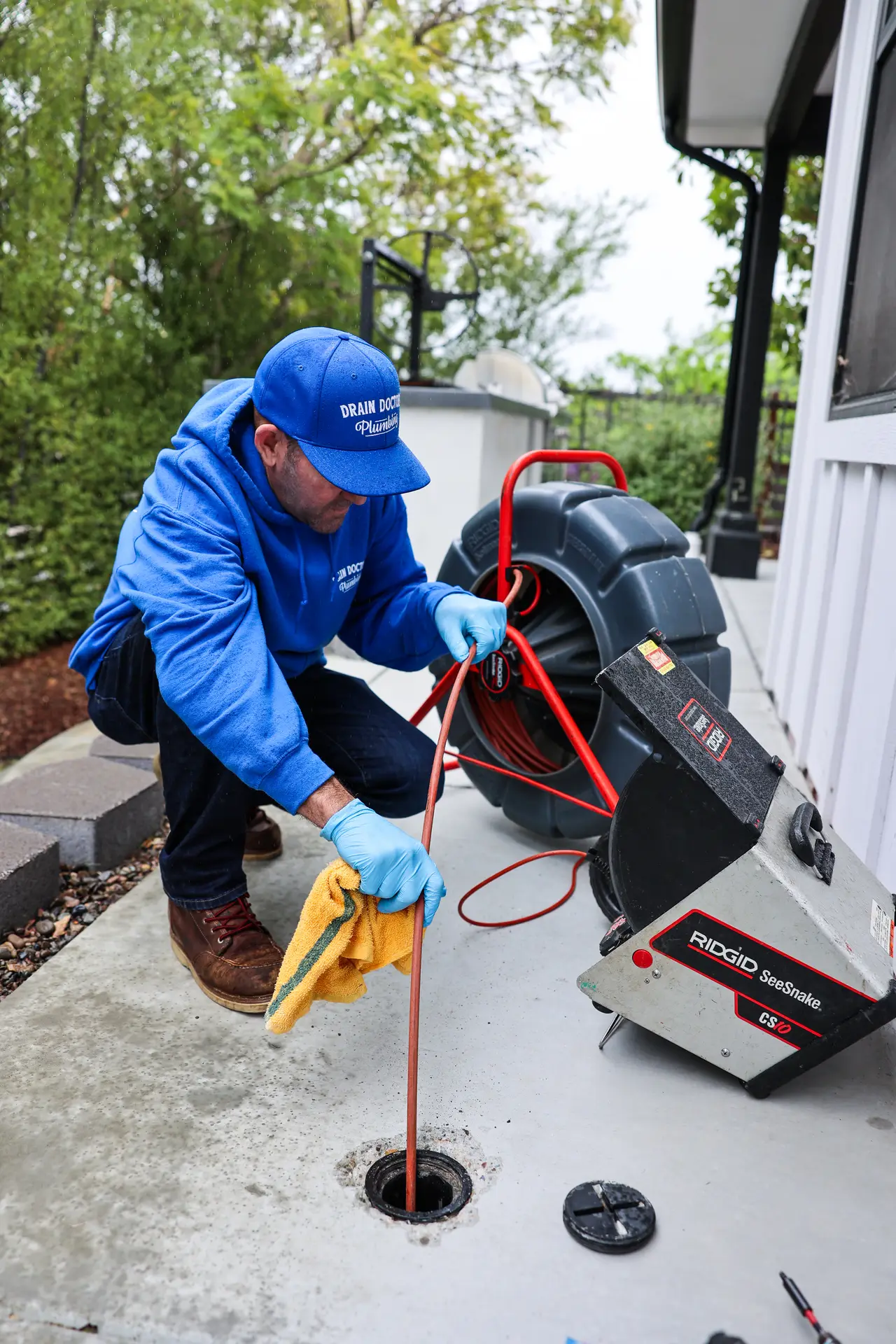
Every repair-versus-replacement decision starts with actually seeing what's happening inside the pipe. Guessing based on symptoms alone leads to the wrong call more often than not.
Isolated defects versus systemic failure
A camera run through the line shows whether a problem is contained to one section or spread across the whole run. A single cracked joint, one spot of root intrusion, or a localized offset looks very different on camera than a pipe with widespread cracking, flattening, or multiple failure points.
This distinction is the single biggest factor in the repair-versus-replacement call. A pipe that's structurally sound everywhere except one defect is a strong repair candidate. A pipe showing the same kind of damage in multiple places, or damage that's clearly getting worse over its whole length, usually isn't.
What the camera can and can't tell you
A camera inspection shows the interior condition of the pipe clearly: cracks, offsets, root intrusion, bellies where the pipe has sagged, and material degradation. What it can't always show is the exact condition of the surrounding soil or how much longer a borderline section will hold up.
- Interior cracks and joint separations are visible directly on camera footage
- Root intrusion severity is visible, though the extent of root growth outside the pipe isn't
- Pipe material and general age-related wear are visible and factor heavily into the read
That's why a camera inspection is the starting point for the decision, not the entire decision. Context about the pipe's age, material, and the surrounding property matters too.
The most common causes behind sewer line damage
According to the U.S. Environmental Protection Agency, the problems that most often lead to sewer line failures and overflows include tree roots entering through cracks or openings, leaky joints letting groundwater and stormwater into the line, buildup from grease and inappropriate materials, and general deterioration in aging infrastructure.
The agency also estimates the nation's sewer collection systems represent more than $1 trillion in infrastructure value, which is part of why getting a repair-or-replace call right matters as much on a single home's line as it does at the municipal level.
Nipomo and Arroyo Grande both have a mix of older and newer housing stock, which means the age and material of a given home's line varies significantly street to street. A camera inspection tells you which category your specific line falls into rather than relying on a neighborhood-wide assumption. The stakes of getting this wrong are real: the California State Water Resources Control Board classifies any sewer spill of 1,000 gallons or more as a reportable Category 2 event, and even a spill as small as 50 gallons still requires formal reporting under the state's Sanitary Sewer Systems General Order.
When targeted repair is the right call
Repair makes sense when the damage is isolated and the rest of the line is structurally sound. It's the less invasive, less expensive path, and it's the honest recommendation whenever the evidence supports it.
Signs that point toward repair
A section of pipe with one clear defect, surrounded by pipe that still looks structurally solid on camera, is the clearest repair candidate. The goal of a targeted repair is fixing the specific failure point without disturbing sections of the line that aren't broken.
- 1A single cracked or offset joint in an otherwise intact run
- 2Isolated root intrusion at one connection point rather than throughout the line
- 3A localized area of corrosion or wear in an older metal pipe that hasn't spread
When these conditions are met, repair addresses the actual problem directly, without the added cost and disruption of replacing pipe that doesn't need it.
What a targeted repair typically involves
Depending on the specific defect, a repair can mean clearing and treating a root intrusion point, addressing a joint separation, or excavating a small, specific section of the line rather than the whole run. The goal is always the smallest footprint that gets the job done correctly, since minimizing disruption to a yard or driveway matters to homeowners.
The right tool matters here too. Starting with hydro jetting or camera-guided diagnosis before reaching for excavation equipment means the repair targets exactly what's wrong rather than defaulting to the biggest possible fix.
Why repair sometimes gets recommended even when replacement sounds simpler
It might seem easier to just replace the whole line once you're already digging, but that reasoning doesn't hold up when most of the pipe is still in good condition. A structurally sound line with one fixable defect doesn't need to be torn out, and doing so would mean paying for work that isn't necessary.
An honest diagnosis sometimes means telling a homeowner they don't need the bigger, more expensive project, even when it would be an easier sell. That's the standard the recommendation should be held to every time.
When full replacement is the honest recommendation
Replacement becomes the right call once the camera shows damage that's spread across the line, or once the pipe's age and material make repair a short-term fix at best.
Signs that point toward replacement
Widespread cracking, multiple failure points along the run, significant bellying where the pipe has sagged and is holding standing water, or a pipe material that's simply reached the end of its practical service life all point toward replacement rather than repair.
- Multiple separate defects spread across different sections of the same line
- A pipe material known to fail broadly once it starts failing at all, rather than in isolated spots
- Recurring backups at the same general area even after previous repair attempts
When these patterns show up, a repair addresses one symptom while leaving the underlying problem to resurface somewhere else in the same line within a relatively short time.
The math behind repeated repairs
A line that keeps needing repair in different spots, spaced months apart, usually costs more over time than a single, complete replacement would have. Each individual repair might look like the cheaper option in the moment, but repeated excavation and repair work adds up.
This is where an honest read matters most. Recommending another round of spot repairs on a line that's clearly failing broadly isn't doing the homeowner any favors, even if it's the smaller invoice today.
What full replacement typically involves
A full sewer line replacement means removing the damaged pipe along its length and installing new pipe in its place. Depending on the location and depth of the line, this can mean excavation across a driveway, a section of yard, or in some cases under a portion of the home's foundation footprint.
- 1Locating and marking the full run of the existing line before any digging starts
- 2Excavating along the length of the damaged section, with care taken around landscaping, hardscape, and utilities
- 3Installing new pipe and confirming proper slope and connection before backfilling
The scope here is genuinely larger than a targeted repair, which is exactly why the camera inspection and the pattern of damage need to support this recommendation before it's made.
What each path looks like in Nipomo and Arroyo Grande specifically
Local conditions in Nipomo and Arroyo Grande factor into both how damage develops and how a repair or replacement project actually plays out on the ground.
Housing age and soil conditions across both cities
Nipomo and Arroyo Grande both have a range of home ages, from newer developments to older properties with sewer lines that have been in the ground for decades. Older clay and cast iron lines, common in the area's older housing stock, tend to show the kind of widespread wear that points toward replacement, while newer PVC lines more often show isolated, repairable defects when something does go wrong.
Soil conditions across the region also affect how a line ages, since ground movement and moisture retention both put stress on pipe joints over time regardless of the pipe's material.
Point-of-sale and property transfer considerations
Some jurisdictions along the Central Coast require a documented sewer lateral inspection at specific trigger points.
The City of San Luis Obispo, for example, requires an inspection before a change in property ownership, along with several other triggers like adding a bedroom or bathroom, increasing water meter size, or adding an accessory dwelling unit, according to the City's own utilities department. A homeowner there can be exempt from a fresh inspection if the lateral was installed or replaced within the last 20 years, or if an inspection was already completed within the past 5 years.
Requirements vary by jurisdiction, so a homeowner in Nipomo or Arroyo Grande planning a sale or a major renovation should confirm what applies specifically to their property rather than assume the same rules as the city of San Luis Obispo itself.
- Check with the local jurisdiction before listing a property or starting a major renovation
- A camera inspection completed ahead of time settles the question either way
- Documentation from a prior inspection or replacement can satisfy some jurisdictions' exemption rules
Getting this confirmed early avoids a surprise during escrow or mid-renovation.
Getting an honest recommendation either way
Whether the right call for your property is a targeted repair or a full replacement, the goal is the same: an honest read of what the camera actually shows, without steering the recommendation toward whichever option costs more. Right tool for the right job applies here just as much as it does to any other part of the work.
Conclusion
Repair versus replacement isn't a judgment call made on a hunch. It comes down to what a camera inspection actually shows: isolated, fixable damage points toward repair, while widespread failure or a pipe past its practical lifespan points toward replacement.
Nipomo and Arroyo Grande homeowners benefit from getting this read right the first time, since it means paying for the work that's actually needed rather than either an unnecessary full replacement or a repair that only holds until the next backup.
If you're dealing with a sewer line issue and want a straight answer on what your property actually needs, Drain Doctors Plumbing can run a camera inspection, walk you through exactly what it shows, and recommend the path that makes sense for your specific line. Reach out to Drain Doctors Plumbing to get started.