A sewer line rarely fails all at once. It sends signals first, small ones that are easy to write off as unrelated or minor, until the day they aren't. Learning to recognize those signals early is what separates a manageable repair from an expensive emergency.
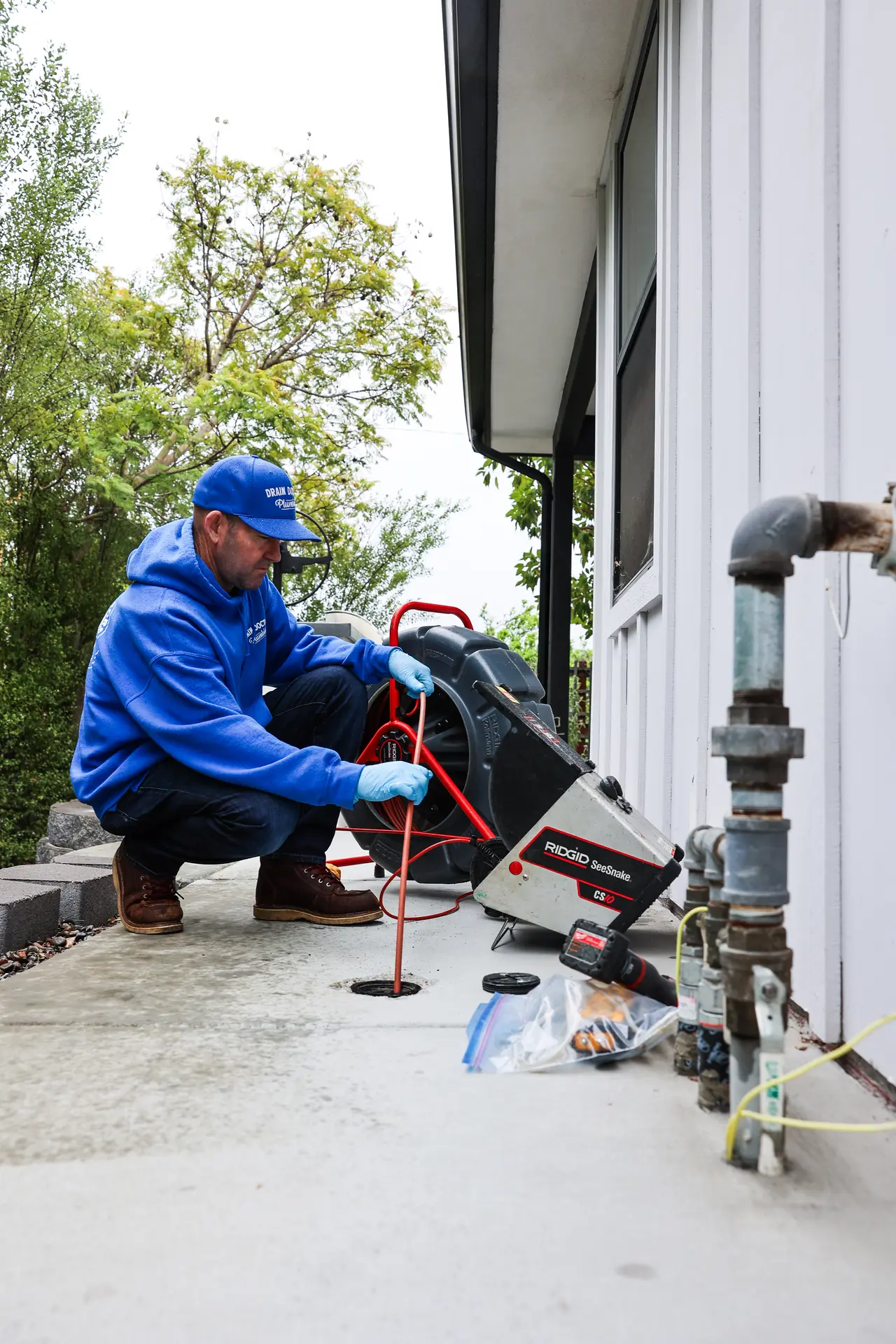
Central Coast homes face the same underlying risks as anywhere else: aging pipe materials, tree roots, and ground movement all working against a system that's buried out of sight and easy to ignore until something goes wrong. A sewer camera inspection is the only way to know for certain what's happening underground, but knowing what to watch for above ground is what tells you it's time to schedule one.
This guide walks through five specific warning signs, why each one happens, and what it usually means about the condition of your line.
In this article, you will learn about:
- Slow drains and recurring backups throughout the house
- Gurgling sounds and unusual noises from your plumbing
- Soggy patches, sinkholes, and sewage odors around your property
- Rising water bills without a clear explanation
Keep reading to find out which of these signs your home might already be showing you.
Slow drains and recurring backups throughout the house
A single slow drain is usually a local clog. Multiple slow drains, especially ones on different floors or in different parts of the house, point to something happening further down the line where all of your plumbing converges.
Why this pattern matters more than a single clog
If your kitchen sink, bathroom tub, and a downstairs toilet are all draining slowly at the same time, the problem almost certainly isn't in any one of those fixtures. It's in the shared line they all empty into, which usually means a partial blockage or a structural issue somewhere in the main sewer line.
This distinction matters because a local clog is a quick fix, while a main line problem needs a different kind of attention. Treating a whole-house pattern as if it were an isolated clog often means the real problem keeps getting worse while the symptom gets temporarily masked.
What causes this kind of widespread slowdown
- Root intrusion narrowing the pipe's interior diameter at one or more points along the line
- A pipe belly, where a section has sagged and now holds standing water and debris
- Significant buildup of grease, debris, or non-flushable materials accumulated over time
Any of these can develop gradually, which is exactly why the slowdown often creeps up rather than announcing itself all at once. A pattern that seemed like an occasional annoyance six months ago can become a near-daily frustration once the underlying blockage has grown enough.
When backups start recurring
A backup that clears with a plunger or a store-bought treatment but comes back within weeks is a strong signal that whatever's causing it hasn't actually been resolved. Recurring backups, especially at the same fixture or in the same general area, deserve a proper camera inspection rather than another round of the same temporary fix.
Gurgling sounds and unusual noises from your plumbing
Sound is one of the earliest and most reliable warning signs a sewer line gives, and it's often the one homeowners notice first without immediately connecting it to a bigger problem.
What gurgling actually means
Gurgling happens when air gets trapped and forced through water in the pipes, usually because something downstream is restricting normal flow. When you flush a toilet or run water and hear a gurgle from a different drain in the house, that's air being pushed backward through the system because it can't move forward the way it's supposed to.
This is different from the occasional gurgle a drain makes as it clears. A recurring gurgle from an unrelated fixture, especially one that happens consistently rather than occasionally, is the sound of a system working against a real obstruction.
Other sounds worth paying attention to
- 1A gurgling toilet that happens every time you run the washing machine or dishwasher
- 2Bubbling sounds coming from a floor drain or basement drain
- 3A hollow, echoing sound when water drains that seems different from normal
None of these sounds are dangerous on their own, but they're consistent, reliable indicators that air and water are moving through the system in a way that isn't normal.
Why this sign gets ignored
Because gurgling doesn't cause visible damage or an obvious mess, it's easy to dismiss as a quirk of an older house rather than treat it as an early warning. By the time gurgling escalates into an actual backup, the underlying blockage or defect has usually had time to get considerably worse.
Soggy patches, sinkholes, and sewage odors around your property
Your yard and the air around your home sit directly above and around your sewer line, which makes them some of the most visible places a failing line can show symptoms, even when nothing seems wrong inside the house.
What a leaking line does to the ground above it
A cracked or leaking sewer line releases wastewater into the surrounding soil, and that extra moisture and nutrient content changes how the ground and vegetation above it behave. A patch of grass that's noticeably greener and more lush than the surrounding lawn, without an obvious explanation like extra watering, can be a sign that wastewater is fertilizing the soil from below.
Soggy ground that never fully dries out, even during a stretch of dry weather, points to the same underlying cause: water reaching the surface that shouldn't be there at all.
More serious surface signs
- A soft or spongy spot in the yard that gives slightly underfoot
- A visible depression or small sinkhole forming along the line's likely path
- Cracking or shifting in a nearby driveway, walkway, or foundation slab
These more advanced signs typically mean the pipe has already collapsed or is close to it, since soil erosion from a persistent leak eventually removes the support the ground above was relying on.
Sewage odors inside or around the property
A sewage odor near a floor drain, in a basement, or around an exterior cleanout usually means gas or wastewater is escaping the system somewhere nearby. Outdoors, a sewage smell near your yard, especially paired with a soggy patch or unusually green grass, points toward a leak in the same general area.
Sewage carries bacteria, viruses, and other pathogens, and prolonged exposure to sewage-contaminated moisture in a home can create the conditions for mold growth.
The Centers for Disease Control and Prevention notes that mold can begin growing on damp materials within 24 to 48 hours, which is part of why a sewage odor and any accompanying moisture deserve a prompt response rather than a wait-and-see approach.
- Note exactly where the smell is strongest and whether it's constant or intermittent
- Check for accompanying signs nearby, like dampness, staining, or unusual sounds
- Avoid running extra water into the system until the source is identified, since that can push more wastewater toward the leak
Keeping indoor humidity below 50 percent is one practical step the CDC recommends for limiting mold growth generally, though it doesn't address the underlying sewer issue driving the moisture in the first place.
Rising water bills without a clear explanation
A water bill that climbs without a corresponding change in your household's habits is a sign worth investigating, and a failing sewer line is one of several possible explanations.
How a sewer line problem shows up on your bill
Most residential water meters measure water entering the home, and many utilities calculate sewer charges based on that same reading, meaning a leak anywhere in your plumbing system, including the sewer line itself in some configurations, can inflate both your water and sewer charges even if you never see the water directly.
According to EPA WaterSense, an unexplained increase in water use that isn't tied to more outdoor watering or a change in habits is a common indicator of a leak somewhere in the system. The average household uses around 82 gallons per person per day, which works out to roughly 10,000 gallons a month for a family of four, giving you a rough baseline to compare against your own usage trend.
Ruling out other causes first
Before assuming a sewer line issue, it's worth ruling out the more common culprits: a running toilet, an irrigation leak, or a dripping fixture. A simple meter check, reading it before and after a two-hour period with no water use in the house, can confirm whether a leak exists somewhere in the system at all.
- Check your water meter during a period of no water use in the house
- Rule out irrigation and outdoor fixtures separately from indoor plumbing
- If indoor fixtures test clean but usage stays elevated, a sewer or supply line leak becomes more likely
Aging pipe infrastructure is a real and ongoing problem across California specifically. California's Department of Water Resources has funded local repair projects for communities losing as much as 25 percent of their water supply to aging, leaking pipeline infrastructure, underscoring how common and costly undetected leaks can be at any scale.
When to stop guessing and get an inspection
If your usage stays elevated after ruling out the obvious causes, a professional inspection is the only way to confirm what's actually happening underground. Guessing at this stage usually means either overlooking a real problem or spending money addressing something that was never the actual cause.
Conclusion
A failing sewer line rarely announces itself with one dramatic symptom. It's usually a combination of smaller signs, a slow drain here, a gurgle there, a patch of unusually green grass, that build into a clearer picture once you know what to look for.
Central Coast homes deal with the same underlying pressures as anywhere else: aging pipe materials, root intrusion, and ground movement that all work against a system built to last decades but not necessarily forever. Catching these signs early is what keeps a manageable repair from becoming a much bigger project.
If you've noticed any of these warning signs, Drain Doctors Plumbing can run a full camera inspection and give you a clear, honest read on what's actually happening in your line. Reach out to Drain Doctors Plumbing to get started.