
Well pump troubleshooting on a rural San Luis Obispo County property starts with a simple question: is the pump actually the problem? A home that suddenly loses water can have a failed pump, but the same symptom can come from a tripped breaker, damaged pressure switch, empty pressure tank, leaking supply line, low groundwater level, clogged treatment equipment, or a control that is no longer telling the pump when to run.
That distinction matters on larger properties where the well, pressure equipment, storage, filtration, irrigation, and house may be separated by long pipe runs. Rural parcels around Paso Robles, Templeton, Atascadero, Edna Valley, Nipomo, and other parts of San Luis Obispo County can also rely on private wells that behave differently from municipal water systems.
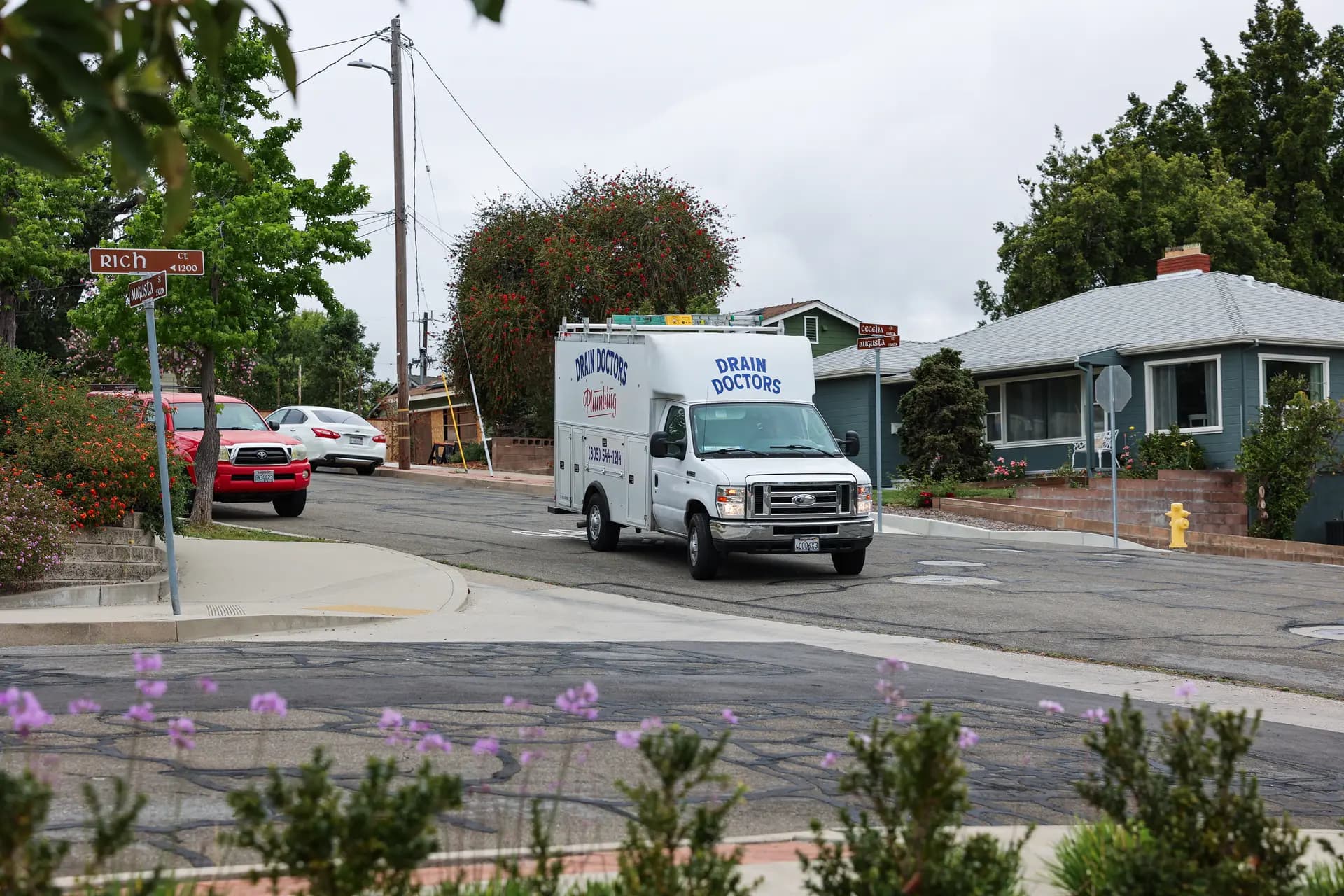
Drain Doctors Plumbing handles sump, well, and ejector pump service, but each pump serves a different system. A well pump supplies water to the property. A sump pump removes groundwater from a low area, while an ejector pump moves wastewater when gravity drainage is not enough. Confirming which system has failed keeps the diagnosis pointed in the right direction.
In this article, you will learn about:
- What to check first when a private well stops supplying water
- How pressure switches, pressure tanks, controls, and piping affect pump operation
- Why short cycling, air at faucets, and fluctuating pressure point to different problems
- How to separate a pump failure from a low-producing or dry well
- When the safest next step is testing rather than repeated resetting
The objective is not to replace a pump because water stopped. It is to determine where the well system is losing power, pressure, flow, or available water and repair the part that actually failed.
Local groundwater data matters before you blame the pump
Rural San Luis Obispo County is not a single groundwater system, and that matters when a property starts losing pressure or water.
In the Paso Robles Area Subbasin alone, the California Department of Water Resources reported 75,100 acre-feet of groundwater extraction in Water Year 2024. Of that total, 3,134 acre-feet was categorized as rural domestic, golf course, and small public water system use. Those figures do not diagnose an individual well, but they show why groundwater availability and recovery have to stay in the troubleshooting conversation instead of treating every no-water call as a failed pump.
The local concern is active enough that the U.S. Geological Survey launched a groundwater evaluation in the Adelaida area of San Luis Obispo County in 2026, noting that groundwater is the area's primary water source and that stakeholders are concerned about how increased demand may affect groundwater levels and availability.
For rural properties west of Paso Robles and in similar groundwater-dependent pockets, a pump that suddenly struggles can therefore require both equipment testing and a look at what the well itself can currently produce.
San Luis Obispo County also maintains a dedicated Well Program with permit records and private-well owner resources. The county notes that water quality from private, non-commercial wells is not routinely regulated or monitored by an outside agency, so well owners are responsible for making sure their water is safe. That becomes especially relevant when a pump problem arrives with sediment, odor, discoloration, or a change in taste.
Drain Doctors serves properties throughout San Luis Obispo County, including rural and semi-rural areas where private wells, long supply runs, treatment equipment, and storage systems are more common than they are on a compact city lot.
Start with the symptom before touching the equipment
A useful diagnosis begins with what changed. Total loss of water, weak pressure, pressure that comes and goes, rapid pump cycling, sputtering faucets, unusual noise, or a pump that never seems to stop each narrow the list differently.
Before opening covers or adjusting controls, note what the system is doing. Many well components operate on electrical power and pressurized water, and pump controls may contain exposed line voltage. Homeowners can safely observe symptoms and check obvious household conditions, but electrical testing, pump removal, pressure-switch work, and well modifications should be left to qualified contractors.
Record these details before service:
- Whether there is no water at all or only reduced flow
- Whether every fixture is affected or only part of the property
- Whether the problem began suddenly or worsened over days or weeks
- Whether the pump can be heard starting, stopping, humming, or running continuously
- Whether the pressure gauge moves and where it normally operates
- Whether a breaker, disconnect, pump-control box, or low-water cutoff has tripped
- Whether irrigation, livestock watering, a detached building, or another high-demand use was running
- Whether neighbors on private wells have noticed unusually low groundwater conditions
A whole-property plumbing inspection can help when it is not clear whether the loss is on the well side or in the plumbing after the pressure system.
No water anywhere on the property
When every fixture is dry, start with the broadest possibilities. The well system may have lost electrical power, the pressure control may not be calling for water, the pump may have failed, a major line may have broken, or the water level may have fallen below the pump intake.
Check whether the property has normal electrical service and whether an obvious breaker has tripped. Do not repeatedly reset a breaker that trips again. That can indicate a motor, wiring, control, or short-circuit problem that needs testing rather than another attempt to force the pump on.
Also look for evidence of a large leak between the well and the house. Wet ground, an unexplained soft area, water surfacing along the supply route, or a pump that runs without building pressure can shift the investigation toward the buried line. Drain Doctors can evaluate water-line repair and replacement when the pump is producing but the water is escaping before it reaches the building.
Low pressure is different from no water
A well system that still supplies water but feels weak has a different diagnostic path. Low pressure can come from a clogged filter, failing pressure tank, worn pump, partially closed valve, leaking pipe, low well yield, pressure-switch problem, or treatment equipment that is restricting flow.
Compare several fixtures. If pressure is poor throughout the property, the restriction or supply issue is likely upstream of individual faucets. If only one shower or sink is weak, the well may be fine and the problem may be local to that fixture.
A pressure gauge helps show how the system behaves, but the number alone is not enough. The important pattern is whether pressure falls normally during use, reaches the expected pump-start point, recovers while the pump runs, and reaches the shutoff point without stalling or overshooting. If the pattern is abnormal, water-pressure service and well-system testing can identify whether the issue sits before or after the pressure tank.
Sputtering faucets can mean air is entering the system
Air at faucets can happen after plumbing work, but repeated sputtering on a private well deserves attention. Possible causes include a falling water level, a pump drawing air, a leaking fitting on certain pump configurations, a pressure-tank problem, or air entering through treatment equipment.
Do not assume that sediment or air automatically means the well is dry. The system needs to be observed under demand. Water level, pump runtime, pressure recovery, and whether the symptom becomes worse during heavy use all provide more useful evidence than one faucet test.
If the water also changes color, odor, or sediment load, stop treating the issue as pressure alone. Water treatment and filtration can address quality problems after the source and well condition are understood.
Follow the well system from power to pressure to flow
A private well is a chain of connected components. The pump moves water. The pressure switch or controller tells it when to run. The pressure tank stores a usable volume of pressurized water and reduces unnecessary starts. Piping carries the water to the house, and filtration or treatment may add resistance after the tank.
Troubleshooting becomes easier when those components are tested in sequence instead of replacing the most visible part first.
A typical diagnostic path includes:
- 1Confirm electrical supply to the pump system and inspect for an obvious tripped control or damaged component.
- 2Read the pressure gauge with no fixtures running and then under controlled water use.
- 3Observe whether the pressure switch calls for the pump at the expected point.
- 4Check whether pressure rises steadily once the pump starts.
- 5Evaluate the pressure tank for correct air charge, waterlogging, or loss of usable drawdown.
- 6Isolate treatment equipment, irrigation, detached buildings, or other branches when appropriate.
- 7Check for leakage in accessible and buried supply piping.
- 8Measure pump output and well recovery when the symptoms point toward reduced well production.
California's Department of Water Resources recommends that well owners know the age, depth, condition, and pump details of their well and have the water system inspected regularly. Keeping the well log, pump model, installation date, pressure settings, and past service records together can shorten the diagnostic process considerably.
The pressure switch is a control, not a water source
On many conventional systems, the pressure switch starts the pump when pressure falls to a set cut-in point and stops it at a higher cut-out point. If the switch is burned, obstructed, mechanically damaged, incorrectly adjusted, or not receiving the conditions it expects, the pump may fail to start or may run abnormally.
A homeowner may notice burned contacts, corrosion, clicking without pump operation, or a pressure gauge that falls below the normal start point without the pump coming on. Do not remove the switch cover and probe energized terminals. Line voltage may be present even when the pump itself is not running.
The useful question is whether the switch is failing to send power, whether another control is intentionally blocking operation, or whether the pump receives power but cannot move water. Those are three different repairs.
A pressure tank controls cycling more than most homeowners realize
The pressure tank contains compressed air separated from system water by a diaphragm or bladder on most modern residential setups. That air cushion allows the house to use a volume of water before the pump must start again.
When the tank loses its air charge or the internal bladder fails, the pump may start every time a small amount of water is used. A toilet refill, quick hand wash, or ice maker cycle can trigger another motor start. That is called short cycling, and it increases wear on the pump, switch, and electrical components.
Common pressure-tank clues include:
- Pump starts and stops every few seconds during steady water use
- Pressure gauge swings rapidly between start and stop points
- Very little water is available before the pump starts
- The tank sounds waterlogged rather than having distinct air and water zones
- Water appears at the air valve, which can indicate a failed bladder
- Pressure becomes unstable even though the pump can still build to shutoff
The tank must be isolated and depressurized correctly before its air charge can be evaluated. Adding air without testing the tank and pressure settings can mask the problem rather than solve it.
Continuous pump operation means pressure is not reaching the stop condition
A pump that runs and runs may be responding to legitimate high demand, but continuous operation during normal household use can indicate a leak, low well yield, worn pump, damaged drop pipe, failed check valve, low voltage, clogged intake, or pressure setting the system cannot reach.
Start by shutting off known water uses. If the pump continues to run, determine whether water is escaping somewhere or whether the pump cannot produce enough pressure. Leak detection can help when the loss is concealed between buildings, under slabs, or along a long rural supply route.
Running a struggling pump indefinitely can overheat the motor or worsen the failure. If the system cannot reach normal shutoff pressure, turn off nonessential water demand and arrange testing rather than letting the equipment labor continuously.
Match the symptom to the likely part of the system
Well-pump problems overlap, but the way pressure changes over time often separates them. A dead pump and a dry well can both leave the house without water. A leaking line and a worn pump can both make the motor run too long. The difference comes from combining electrical, pressure, flow, and water-level observations.
Use the symptom as a direction, not as a diagnosis:
- No pump sound and no water: power supply, breaker, disconnect, pressure switch, controller, wiring, motor, or low-water protection may be involved.
- Pump runs but no water arrives: low water level, loss of prime on applicable systems, blocked intake, failed pump, damaged drop pipe, check-valve problem, or major line break may be involved.
- Pump runs for a long time and pressure rises slowly: pump wear, low voltage, restriction, leak, low well yield, or reduced pump capacity may be involved.
- Pump cycles rapidly: pressure tank, switch settings, check valve, leak, or very small system drawdown is more likely.
- Pressure is good until several fixtures run: pump capacity, well yield, filtration restriction, pipe sizing, or demand may be limiting the system.
- Air and sediment appear during heavy use: falling pumping water level or well-production issues deserve investigation.
- Pressure changes only after a filter or softener: treatment equipment may be restricting flow even when the well side is operating normally.
The pattern should be reproduced safely before parts are changed. Intermittent failures are especially important to observe under the same demand that produces the complaint.
Short cycling points first toward storage and controls
Short cycling means the pump starts too often and runs for too little time. The pressure tank is a primary suspect, but the technician should also confirm that pressure-switch settings, check valves, and leaks are not contributing.
A hidden plumbing leak can consume the stored water volume and repeatedly trigger the pump. A toilet that runs quietly or an irrigation valve that does not fully close can imitate a tank problem. A general plumbing repair visit can help rule out those easier losses before deeper well work begins.
The repair should restore reasonable drawdown between starts, not merely change the switch settings so the cycling looks different.
Pressure that collapses during irrigation may be a capacity issue
Rural properties often combine household plumbing with irrigation, hose bibs, animal watering, accessory buildings, or other substantial outdoor demand. A system that feels normal inside until irrigation starts may be reaching either the pump's delivery limit or the well's sustainable yield.
That does not automatically mean the pump is undersized. A clogged filter, long undersized pipe run, failing check valve, worn pump, or partially closed valve can create the same symptom. Measure actual flow and pressure before changing equipment.
Properties around Paso Robles can extend from city neighborhoods into ranch and vineyard parcels with private wells, irrigation lines, and long outdoor runs. Around Templeton, larger rural properties may combine wells, septic systems, and longer supply piping than an in-town home. Atascadero properties can present a similar split between city-connected homes and outlying well-water properties. Those layouts make system-level testing more useful than a generic pump-size recommendation.
A drop in water quality can accompany a hydraulic problem
Sediment, cloudy water, or a sudden change in taste or odor may appear when a well is pumped harder than usual, when water levels change, or after equipment or well work. The pump problem and the water-quality concern need to be separated but considered together.
California DWR recommends routine well inspection and water-quality testing for private well owners. After certain well or pump work, disinfection and additional water-quality steps may also be required. Do not assume a filter alone is the answer if the source condition has changed.
Homes on private wells around Nipomo and inland North County can also deal with mineral-heavy groundwater. Treatment should be selected around actual water conditions, not used to cover a failing pump or declining well production.
Rule out a low-producing or dry well before condemning the pump
The pump can only deliver water that is available around its intake. During extended dry conditions or periods of heavy groundwater demand, the water level in a private well can fall. If the pumping water level drops too close to or below the pump intake, the system may produce air, lose pressure, shut down on protection, or stop delivering water.
A dry or low-producing well cannot be diagnosed from the kitchen faucet alone. The technician may need the well construction record, static water level, pumping water level, pump setting depth, recovery rate, and actual output under a controlled test.
California DWR's well guidance specifically encourages owners to know local groundwater conditions and their well's age, depth, condition, and pump details. DWR also notes that water-level measurement and pump testing are valuable for evaluating well and pump efficiency over time.
Its Dry Well Reporting System listed 6,204 cumulative reported dry wells statewide as of October 6, 2026, including outages, interim solutions, and resolved cases. That statewide number is not a forecast for any one SLO County property, but it is a useful reminder that loss of supply can be a groundwater problem as well as a mechanical one.
Static water level and pumping water level are not the same
The static water level is the level in the well after it has recovered without pumping. The pumping water level is where the water stands while the pump is drawing water. The difference between them is drawdown.
A well can have water in it at rest and still fail to sustain the household's demand. If the level drops rapidly during pumping and recovers slowly, the well may be producing less water than the pump is trying to remove. A pump can therefore be operating correctly while the property still experiences low pressure or intermittent loss of water.
That is why simply installing a larger pump can make some problems worse. A higher-capacity pump may pull the water level down faster unless the well and storage strategy can support the additional rate.
Low-water protection may be doing exactly what it should
Some systems include controls designed to stop the pump when they detect a dry-run condition, low current, loss of pressure, or another abnormal state. When water returns after a delay or manual reset, it is tempting to blame the controller.
The protection may instead be preventing the pump from running without adequate water. Repeatedly bypassing or resetting it without checking well recovery can damage the pump and eliminate an important warning that the source is struggling.
The correct next step is to determine why the protective device operated and whether the well recovers normally after resting.
A well that truly goes dry becomes a water-supply issue, not just a pump repair
If water-level testing confirms that the well no longer provides adequate water, the solution may involve lowering the pump where feasible and permitted, rehabilitating the well, adding storage, reducing peak demand, drilling a replacement well, or pursuing another approved supply option.
Well construction and pump work in California are regulated activities. The California Department of Water Resources notes that installation, repair, or replacement of a well pump must be performed by appropriately licensed contractors, and local permitting may apply to well modification or replacement.
Drain Doctors Plumbing can help determine whether the household plumbing, controls, pressure system, or connected piping are contributing to the problem and coordinate the right next step when the well itself requires specialized work.
Rural properties need the whole supply path checked
On a compact suburban lot, the well equipment and house may be relatively close. On a ranch, vineyard, acreage, or hillside property, the pump may feed long buried lines, storage tanks, treatment equipment, pressure boosters, irrigation branches, and detached structures before water reaches the farthest fixture.
Every additional component creates another place for pressure to drop or water to escape. That is why the diagnosis may cross more than one category of plumbing service, especially when a well pump, pressure tank, buried water line, filtration equipment, and building plumbing all interact.
When the symptom appears only at one building or only during a particular use, map the system before changing pump equipment. Identify where each branch begins, which valves control it, and whether the pressure problem exists at the tank, at the house entry, or only at the end of a long run.
Long buried lines can imitate pump failure
A leak between the well and the home may never create an indoor stain. Water can disappear into dry soil while the pump runs longer than normal and pressure recovers slowly. Larger properties may also have old capped branches, irrigation tie-ins, hydrants, or outbuildings that make isolation more complex.
Watch for unexplained pump operation when no one is using water, wet or unusually green areas along the supply route, lower-than-normal pressure, and electrical use that rises without a change in household habits. If nothing is visible at the surface, leak detection can help isolate whether water is being lost in a concealed or underground section before excavation starts.
A targeted water-line evaluation can determine whether repair belongs above ground at the pressure equipment or underground along the distribution line.
Treatment equipment should be tested as part of the pressure path
Sediment filters, cartridge filters, iron treatment, softeners, and other equipment can create substantial pressure loss when fouled or malfunctioning. If pressure is normal before treatment and poor after it, replacing the pump will not solve the restriction.
Check differential pressure where the equipment allows it and follow manufacturer bypass procedures only when safe and appropriate. A water-treatment assessment can help determine whether the equipment is causing the symptom or simply responding to changing well water.
Storage and booster systems add another layer of controls
Some rural properties use atmospheric storage tanks or cisterns between the well and the house. In that arrangement, one pump may fill storage while a separate booster system pressurizes the building. Losing water at the faucet does not immediately identify which pump failed.
Check whether the storage tank has water, whether the fill controls are functioning, and whether the booster pressure system operates independently. Treating a two-pump arrangement like a conventional one-pump pressure-tank system can lead to the wrong replacement.
Know when to stop troubleshooting and schedule service
Homeowner observations are useful, but several well-system symptoms should move directly to professional testing. Electrical components, pump motors, pressurized tanks, deep-well equipment, and well sanitation introduce risks that are not appropriate for trial-and-error repair.
Arrange service when you notice any of the following:
- Breaker or overload protection trips repeatedly
- Pump hums, grinds, or runs without building pressure
- Pressure switch chatters, sparks, or shows burned components
- Pump starts every few seconds during normal water use
- Water appears at the pressure tank's air valve
- Pressure falls even when fixtures and irrigation are off
- Pump runs continuously but cannot reach shutoff pressure
- Faucets repeatedly spit air or sediment during ordinary household demand
- Water supply returns only after the well rests for a period
- Buried areas stay wet or the pump runs when no water should be in use
- Water quality changes abruptly after pump or well behavior changes
Do not keep resetting electrical protection, adjusting pressure-switch screws, adding air to an untested tank, or running a pump that is obviously starved for water. Those steps can complicate the diagnosis and turn a control or tank problem into pump damage.
Repair or replace should follow testing
A failed switch does not justify a new pump. A waterlogged tank does not mean the well is failing. A worn pump may be replaceable even when the well itself remains productive. Conversely, a new pump cannot solve an inadequate water level, collapsed supply line, or severe restriction downstream.
The repair decision should account for:
- Pump age and measured performance
- Motor and electrical condition
- Well depth and pump setting
- Static and pumping water levels
- Pressure tank condition and usable drawdown
- Pressure-switch and control operation
- Flow requirements for the home and outdoor uses
- Condition of buried supply piping
- Filtration and treatment pressure loss
- History of previous failures and repairs
That sequence keeps the recommendation tied to evidence instead of the assumption that the most expensive component must be the problem.
Keep a record of the system after the repair
Write down the pump model, installation date, voltage, normal pressure range, pressure-tank size, control settings, measured flow, and any known well-depth or water-level information. Keep the well log and past water-quality results with those records.
The next time pressure changes, those baseline numbers make it much easier to tell whether the pump has degraded, groundwater conditions have changed, or another part of the system is responsible.
Conclusion
Well pump troubleshooting on a rural San Luis Obispo County property is a system diagnosis, not a single-part guess. Power, controls, pressure tank, piping, treatment equipment, pump output, and available groundwater all have to work together before water reaches the faucet.
Start with the symptom, observe pressure and pump behavior, and rule out leaks and downstream restrictions before assuming the pump has failed. If the system short cycles, runs continuously, loses pressure, repeatedly draws air, or stops producing water, testing should determine whether the problem is in the equipment or the well itself.
Drain Doctors Plumbing serves rural and in-town properties across its Central Coast service area, and can help trace well-system pressure and plumbing problems to the right component. Contact Drain Doctors Plumbing to schedule well pump troubleshooting and service.
Tell us what's going on and our licensed team will point you in the right direction. Call (805) 467-1214 or request service online.