The right low-flow fixture upgrades save water without making every shower feel weak or every sink take forever to rinse. Modern fixtures can use less water and still deliver a comfortable spray, a clean flush, and practical flow, but only when the product fits the home and the plumbing behind it works properly.
That last point matters across San Luis Obispo County. A restrictive showerhead, a clogged aerator, mineral buildup, an aging pressure regulator, and undersized piping can all feel like the same problem at the tap even though they require very different fixes.
A smart upgrade starts with the fixture you use, the flow rate it needs, and the condition of your plumbing system. Professional low-flow fixture installation can help you make those choices without turning water conservation into an everyday annoyance.
In this article, you will learn about:
- Why lower flow does not have to mean weak performance
- Which fixture upgrades deliver the most useful savings
- How to choose fixtures that still feel good to use
- When the fixture is not the real pressure problem
Keep reading to choose water-saving upgrades that work well in your actual home.
Why lower flow does not have to mean weak performance
Flow and pressure influence one another, but they are not interchangeable. Pressure is the force moving water through the plumbing, usually measured in pounds per square inch, while flow is the volume delivered over time, usually measured in gallons per minute.
A well-designed efficient fixture controls that volume while shaping the water so it remains useful. If the supply pressure is healthy, a lower-flow showerhead can create a satisfying spray instead of simply releasing less water through an oversized opening.
Flow rate and pressure tell you different things
A faucet rated at 1.2 gallons per minute limits how much water can pass through it. That rating does not tell you the pressure available at the wall, whether the aerator is packed with scale, or whether the supply valve is partly closed.
This is why swapping a fixture without checking the system can produce disappointing results. Drain Doctors Plumbing's water pressure and regulator service addresses pressure at the home level when weak or excessive pressure affects more than one fixture.
WaterSense labels account for performance
WaterSense is more useful than a generic "low-flow" label because certified products must meet EPA efficiency and performance criteria. A fixture that merely restricts water is not automatically equivalent to one designed and independently certified to work well at a lower flow rate.
For toilets, the EPA reports that WaterSense models use no more than 1.28 gallons per flush, 20 percent less than the 1.6-gallon federal standard, while completing tests for bowl cleaning, waste extraction, and drainline transport. Those performance requirements are the reason a current high-efficiency toilet should not be judged by memories of early low-flow models that often needed a second flush.
Spray design matters as much as gallons per minute
Shower comfort comes from spray force, droplet pattern, coverage, and temperature stability, not just raw volume. Better low-flow showerheads use engineered nozzles or air induction to spread water effectively across the spray face.
The same idea applies at a sink. A properly selected aerator mixes air into the stream so handwashing and rinsing still feel natural, while a suitable faucet installation keeps the flow rate appropriate for how that sink is used.
Which fixture upgrades deliver the most useful savings
The best place to start is usually a fixture that runs often, uses substantially more water than a modern replacement, or leaks between uses. A whole-house shopping spree is not necessary if a few targeted upgrades account for most of the avoidable consumption.
Actual savings depend on household size, current fixture age, daily habits, and local utility rates. The following fixtures tend to offer the clearest combination of reduced water use and familiar performance.
Showerheads save both water and water-heating energy
Showers use hot water, so reducing flow cuts more than the water portion of a utility bill. It can also reduce the energy needed to heat and deliver that water, especially in a household with several daily showers.
According to the EPA's WaterSense program, replacing a standard 2.5-gallon-per-minute showerhead with a certified model rated at no more than 2.0 gallons per minute can save an average family up to 2,700 gallons of water and 310 kilowatt-hours of electricity per year, along with more than $75 in annual water and energy costs.
Before choosing a replacement, think about the spray pattern, whether the shower has a handheld component, and how the valve behaves when other fixtures run. A professional shower fixture repair or installation can also catch a worn valve or tub-spout diverter that wastes water behind an otherwise efficient showerhead.
Bathroom faucets are often easy wins
Bathroom sinks generally need less flow than kitchen sinks because they handle shorter tasks such as handwashing, shaving, and toothbrushing. An efficient faucet or replacement aerator can reduce water use without making those jobs harder.
An EPA WaterSense fact sheet states that labeled bathroom faucets and accessories use no more than 1.5 gallons per minute, reduce flow by at least 30 percent from the 2.2-gallon standard, and can save the average family about 700 gallons per year. California and local requirements may call for an even lower rated flow, so the product must match the property and project.
Aerators, cartridges, and shutoff valves should be checked together when the faucet is already dripping, difficult to operate, or uneven from side to side. Combining the efficiency upgrade with needed sink plumbing repairs prevents an inexpensive leak from erasing part of the expected savings.
High-efficiency toilets offer the largest single-fixture reduction
An older toilet can send several gallons down the drain with each flush, making it a strong candidate for replacement when it leaks, clogs repeatedly, or performs poorly. Modern bowl geometry and flush-valve design matter more than the size of the water tank alone.
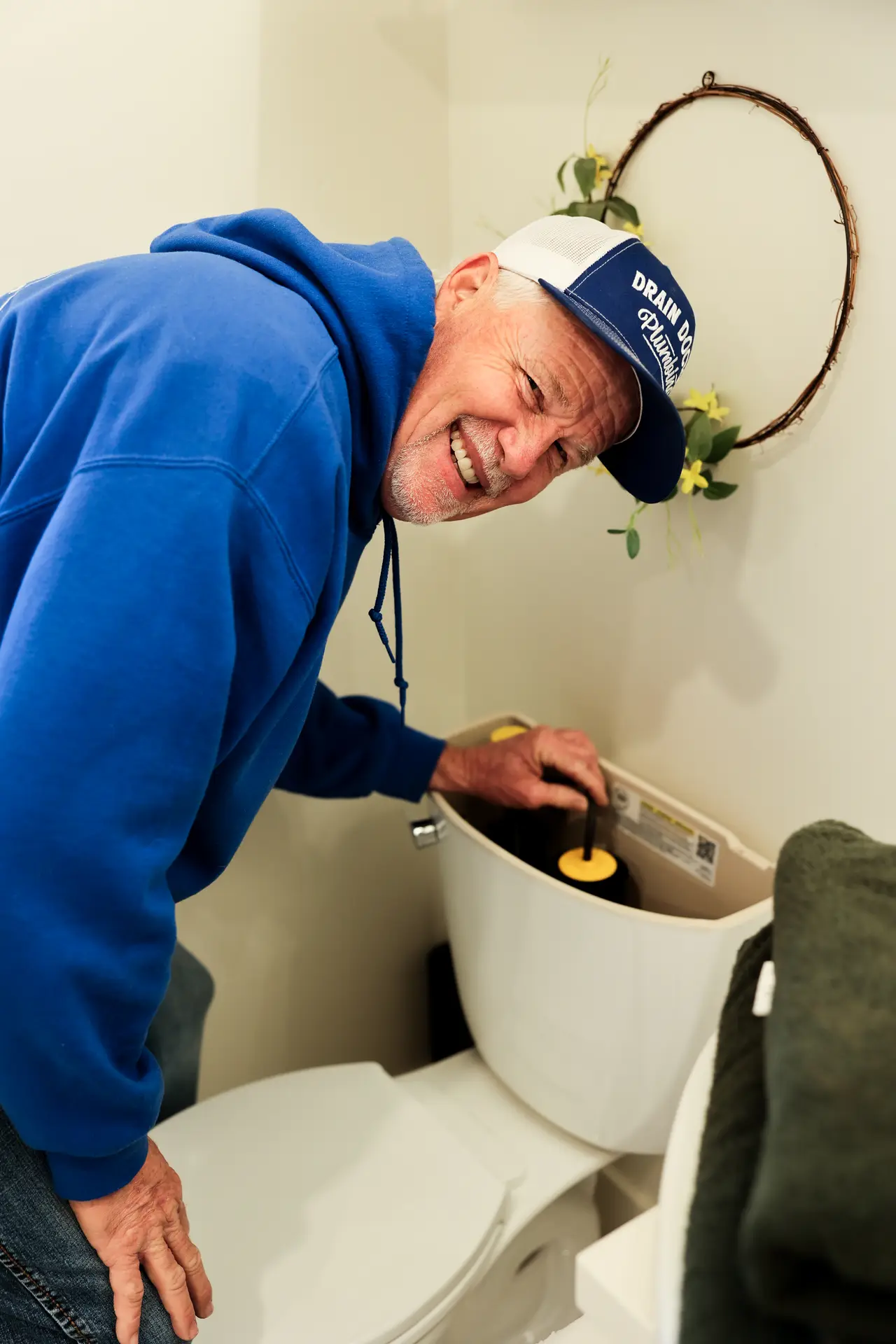
The EPA estimates that replacing old, inefficient toilets with WaterSense models can reduce toilet water use by 20 to 60 percent, save nearly 13,000 gallons per year for the average family, and lower water costs by more than $170 annually. Proper toilet installation and repair also protects the wax seal, flange, shutoff connection, and fill settings that affect long-term performance.
A toilet does not need to be replaced just because it runs. The problem may be a worn flapper, fill valve, or improperly set float, and the right repair can stop the waste. When a running toilet increases water use, diagnosing the leak first makes the repair-versus-replacement decision much clearer.
How to choose fixtures that still feel good to use
Start with certified performance, then choose a fixture around the room and the task. A bathroom faucet, kitchen faucet, showerhead, and toilet do different jobs, so one low numerical rating should not be treated as the universal goal.
The most satisfying upgrade balances efficiency with spray coverage, flushing ability, plumbing compatibility, and maintenance. It should also comply with the standards that apply where the property is located.
Match the flow rate to the fixture's job
Bathroom faucets can work comfortably at a lower flow because most tasks happen close to the outlet. Kitchen faucets need enough flow to fill pots and rinse food, while showers need good coverage and spray force over a larger area.
Use this practical checklist before buying:
- Look for the WaterSense label when that product category is covered.
- Confirm the rated gallons per minute or gallons per flush on the product specification.
- Choose a shower spray pattern and coverage area you will actually enjoy using.
- Check toilet bowl shape, rough-in dimensions, seat height, and flush performance.
- Make sure the fixture meets California and local water-efficiency requirements.
The lowest available number is not always the best fit. An overly restrictive kitchen aerator can make filling and rinsing frustrating, while a well-designed bathroom aerator at the required rate can feel completely normal.
A plumber can help compare the product rating with actual pressure and intended use. That is particularly helpful during broader bathroom plumbing work, when valves, supply lines, and fixture placement can be reviewed at the same time.
Check San Luis Obispo requirements before buying
Local standards can be more specific than a national WaterSense threshold. They can also affect remodeling, changes in building use, significant reconstruction, and property transfers within the City of San Luis Obispo.
The City's Plumbing Retrofit Verification Program lists maximum rates of 1.28 gallons per flush for toilets, 1.8 gallons per minute for showerheads, 1.2 gallons per minute for bathroom faucets, and 2.2 gallons per minute for kitchen faucets. The City also says properties built in 2017 or later do not need its retrofit certification process.
Do not assume a fixture sold online or carried by a national retailer automatically meets the correct local threshold. Verify the model number and flow rating before installation, especially if the work is connected to a sale or certification.
Requirements elsewhere in San Luis Obispo County can differ by utility or water conservation area. The safe approach is to confirm the property's jurisdiction instead of applying City of San Luis Obispo rules to every Central Coast address.
Account for hard-water scale and maintenance
Mineral deposits can narrow small aerator openings and showerhead nozzles over time. The fixture may begin with a strong, even pattern and later develop weak streams, sideways spray, or a visibly uneven flow.
Choose fixtures with accessible aerators, easy-clean spray nozzles, and replacement parts that remain available. If scale appears throughout the home, the larger question may involve local water characteristics and whether water treatment would protect multiple fixtures and appliances.
Maintenance still matters after an efficient fixture goes in. Clean removable aerators and shower nozzles as the manufacturer directs, and watch for drips, loose handles, slow tank refills, or changes in spray pattern.
Do not use harsh tools or aggressive chemicals on finished surfaces or delicate internal components. If cleaning does not restore performance, the restriction may sit inside the valve, supply line, or piping rather than at the visible outlet.
When the fixture is not the real pressure problem
Replacing a showerhead can improve spray quality, but it cannot repair a failed regulator, open a corroded supply pipe, or restore a partially closed valve. If several fixtures have changed at once, the problem probably extends beyond the fixture itself.
Diagnosing that cause before buying upgrades protects both comfort and budget. It also prevents a water-saving product from being blamed for a plumbing condition that was already present.
Test before assuming the fixture is restrictive
Compare hot and cold flow at the affected fixture, then check another fixture nearby. A single weak outlet points toward a local aerator, cartridge, supply valve, or fixture problem, while weak flow throughout the house suggests a broader supply issue.
Homeowners can use a simple hose-bib gauge to get an initial reading, but pressure can change as fixtures operate. Following the basic steps to test home water pressure helps you gather useful information before a service call.
Do not increase pressure just to make a restrictive outlet feel stronger. Excessive pressure can strain valves, connectors, appliances, and supply lines even when the water at the tap feels satisfying.
Record when the problem happens and whether it affects hot water, cold water, or both. That pattern gives a plumber a better starting point than the general description that the pressure feels low.
Look beyond the fixture when several rooms are affected
Whole-home flow can suffer because of a failing pressure-reducing valve, a partly closed main shutoff, corrosion inside older pipes, a service-line issue, or simultaneous high demand. A water heater or hot-side valve can create a similar symptom when only hot water is weak.
Warning signs that point beyond one fixture include:
- Several faucets and showers losing strength around the same time.
- Flow dropping sharply whenever a second fixture turns on.
- Only the hot side running slowly at multiple locations.
- Banging pipes, inconsistent pressure, or sudden surges.
- Visible corrosion, recurring leaks, or discolored water.
These patterns call for diagnosis rather than another aerator or showerhead. Widespread low water pressure can start at the main line, while an isolated problem is more likely to sit close to the affected fixture.
If the home has older galvanized supply piping, internal corrosion can reduce the usable opening even when the exterior looks intact. No fixture upgrade can recover capacity that the pipe itself no longer provides.
Plan upgrades as a system, not a box-by-box swap
A short plumbing review can identify active leaks, unsafe pressure, worn shutoff valves, incompatible connections, and fixtures with the greatest savings potential. This lets you prioritize the work instead of replacing everything at once.
During a general plumbing inspection, ask for actual pressure readings, the condition of visible supply connections, and a clear explanation of which upgrades are optional and which repairs affect performance. That diagnosis-first approach makes the expected result easier to judge.
You may find that a showerhead and two bathroom aerators are worthwhile now, while a toilet can wait until a remodel. In another home, a leaking toilet and failed regulator may deserve attention before any cosmetic faucet changes.
The goal is not to chase the smallest flow rate printed on a package. It is to reduce waste while keeping every fixture reliable, comfortable, and suited to the way your household uses water.
Conclusion
Low-flow fixtures work best when they are chosen for performance, installed correctly, and paired with healthy plumbing. WaterSense certification, local flow limits, and real pressure readings give you a much better basis for a decision than a product label that only says "eco" or "low flow."
Start with the fixtures that run most often or waste the most water. A targeted showerhead, faucet, aerator, or toilet upgrade can make a meaningful difference without forcing you to replace every fixture in the house.
If you are unsure whether the problem is the fixture, pressure regulator, mineral buildup, or supply piping, get the system checked before you buy. A clear diagnosis helps you protect both water savings and everyday comfort.
Drain Doctors Plumbing can evaluate your fixtures and water pressure, recommend options that fit your San Luis Obispo County home, and install upgrades that conserve water without compromising performance.
Tell us what's going on and our licensed team will point you in the right direction. Call (805) 467-1214 or request service online.