
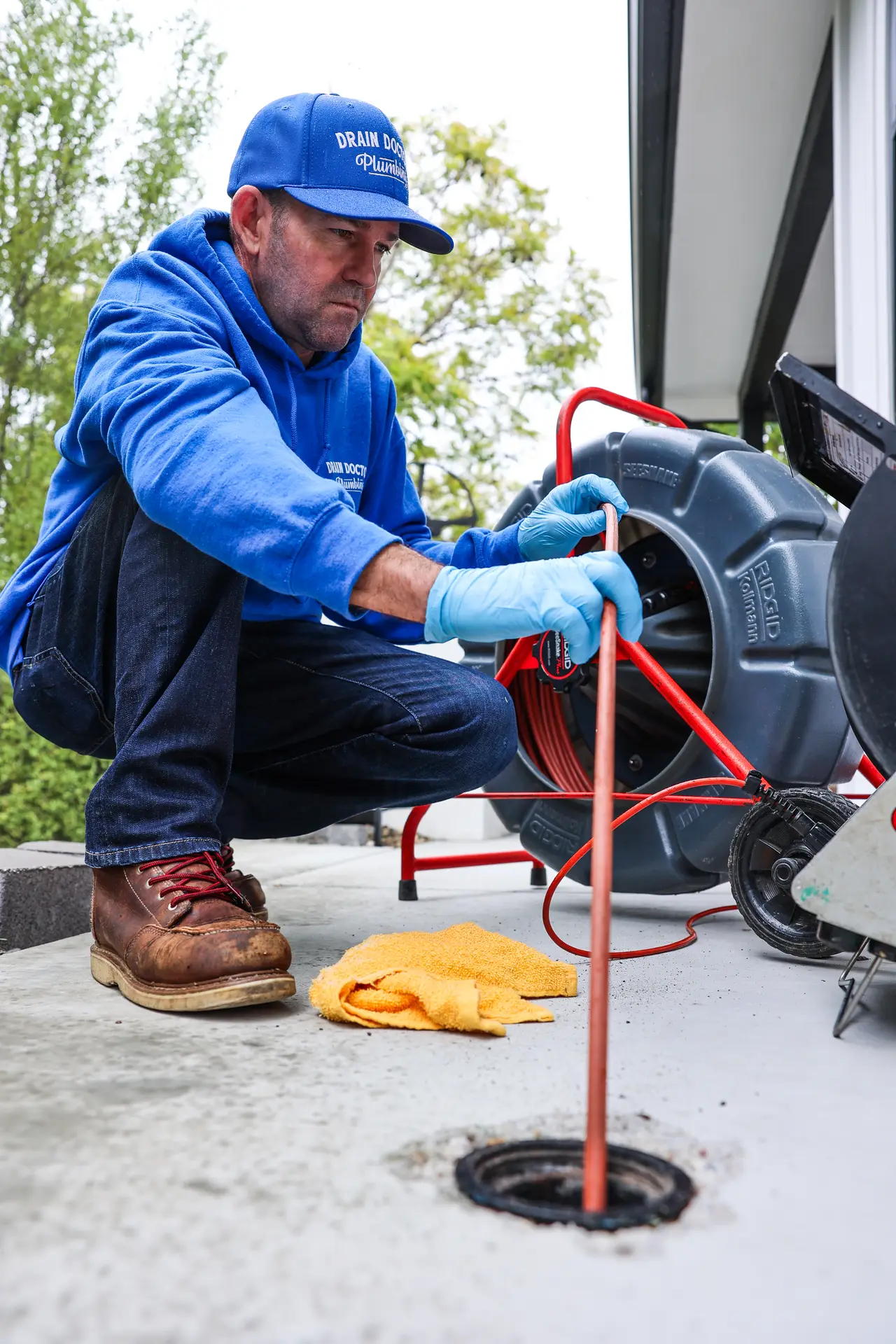
A sewer camera inspection for lateral compliance is quickly becoming the one item that catches San Luis Obispo County home sellers off guard, and it can stall escrow at the worst possible moment. Cities up and down the Central Coast increasingly require proof that the pipe running from your house to the street main isn't cracked, sagging, or choked with roots before a sale can close. That proof comes from a camera pushed through the line, not a guess based on the age of the house.
Most homeowners have never heard the word "lateral" until an agent or a title company mentions it a few weeks before closing. The lateral is the private section of sewer pipe between your house and the public main, and in most cases, the property owner is responsible for it, not the city. When that pipe fails, it fails on your dime, which is exactly why so many local jurisdictions now tie a passing inspection to the sale itself.
This article walks through what the compliance rules actually require, what a camera crew looks for once they're in the pipe, how to schedule an inspection without derailing your closing date, and what happens if the footage turns up a problem. None of this is designed to scare you. It's designed to make sure you know what's coming before a buyer's agent brings it up first.
A sewer camera inspection settles the question in under an hour, and it's the same process whether you're preparing to list a house or just want to know what you're sitting on.
In this article, you will learn about:
- What California's point-of-sale lateral rules actually ask of you
- What the camera sees that you never could
- Getting inspected without blowing up your closing date
- Fixing what the camera finds, the right way the first time
Keep reading to find out exactly what a compliant lateral looks like on paper and how to get there without losing weeks off your timeline.
What California's point-of-sale lateral rules actually ask of you
California doesn't run one statewide lateral law. Instead, individual cities, counties, and sanitation districts pass their own ordinances tied to sewer overflow reduction, and a growing number of them require a lateral inspection before a property changes hands. The result is a patchwork where the rules in one San Luis Obispo County city can look nothing like the rules two exits down the highway.
That patchwork exists partly because overflow enforcement in California gets expensive fast once regulators get involved. After a string of overflows tied to failing private laterals, the Sonoma Valley County Sanitation District was fined more than $700,000 by state water quality regulators, the kind of enforcement action that pushed districts across the state toward mandatory lateral inspection ordinances in the first place.
That's exactly why so many sellers get surprised. An agent who closed a deal in one city last year may have no idea the process works differently a few miles away. The only way to know what applies to a specific address is to check with that city or sanitation district directly, or work with a plumber who already tracks it.
The upside is that the inspection itself is straightforward no matter which jurisdiction you're in. A camera goes down the line, the footage gets reviewed, and the results either clear the property or flag a repair. Here's how that process actually plays out.
When does a lateral inspection actually get triggered?
Most ordinances trigger on one of three events: the sale of the property, a major remodel that pulls a building permit, or a documented sewer backup on the public side of the system. Sale-triggered inspections are the most common version homeowners in San Luis Obispo run into, since real estate transactions are easy for a city to track and enforce against.
The same pattern shows up in Paso Robles and other Central Coast cities working through similar sewer overflow reduction programs. Some jurisdictions also run proactive inspection programs tied to pipe age, checking laterals in older neighborhoods regardless of whether a sale is happening.
If your home was built before the 1980s, there's a reasonable chance it sits in one of those older zones, and a pipe repair or repiping conversation may already be overdue even without a sale on the calendar. A permit-triggered inspection catches people who weren't expecting it at all, since pulling a permit for a remodel or an ADU can quietly open the door to the same requirement.
What "compliant" means once the paperwork is filed
A lateral passes inspection when the footage shows no active leaks, no significant offset joints, no collapsed or bellied sections, and no root mass restricting flow by more than the jurisdiction's threshold, typically somewhere around 25 percent of the pipe diameter. Once a plumber reviews the footage against that standard, they issue a report the seller or homeowner submits to the city or sanitation district.
That report is the actual compliance document, not the inspection itself. A camera crew can run the footage in under an hour, but the paperwork that follows is what satisfies the ordinance. Skipping that step means the inspection technically happened but the property still isn't marked compliant in the city's system.
- The inspection report typically needs to include the date, the technician's findings, footage or still images of any defects, and a pass or fail determination.
- Some cities require the report to come from a licensed contractor rather than a DIY camera rental, which rules out the cheaper borrow-a-camera route for anyone trying to satisfy an actual ordinance.
- A handful of jurisdictions also require the report to be filed within a specific window before closing, sometimes as little as 30 days, so timing matters as much as the result.
Sellers who assume a clean report from five years ago still counts are usually wrong. Most ordinances require the inspection to be current, generally within the last one to two years, since roots and pipe deterioration don't stay static. If your last inspection predates that window, plan on scheduling a new one rather than leaning on old paperwork.
Why enforcement looks different from city to city
Inland cities tend to enforce lateral compliance through their public works or utilities departments, often as part of a broader inflow and infiltration reduction program the city already has in place. Coastal cities like Pismo Beach and Morro Bay sometimes fold the requirement into their sanitation district's rules instead, since the district, not the city itself, owns and maintains the sewer main.
That distinction matters because it changes who you're actually filing paperwork with. A homeowner in one jurisdiction submits the compliance report to city hall, while a neighbor a few miles away submits it to a separate sanitation district office with its own hours, its own forms, and its own review timeline.
The practical fix is the same either way: confirm the exact requirement for the specific address before scheduling anything, rather than assuming the process that worked for a friend's house in a different city applies to yours.
What the camera sees that you never could
A sewer camera is a small, waterproof lens on a flexible cable, fed through a cleanout or an access point and pushed the full length of the lateral while a technician watches a live feed. It's the only reliable way to know what's actually happening inside a pipe buried three to six feet underground, since surface symptoms like slow drains or damp patches in the yard only show up after a problem has already gotten serious.
What the camera finds usually falls into a handful of predictable categories, and most of them trace back to the same two causes on the Central Coast: aging pipe material and tree roots looking for water. Understanding what those categories actually look like on screen helps a homeowner make sense of the report once it lands in their inbox.
That's also where the inspection earns its keep for a sale that hasn't hit a snag yet. Buyers increasingly ask for lateral footage as part of due diligence even in cities without a formal ordinance, because it answers a question a home inspector's visual walkthrough simply can't.
Roots, offsets, and the cracks that fail an inspection
Root intrusion is the most common finding on older Central Coast properties, especially where mature oaks, sycamores, or eucalyptus trees sit near the pipe route. Roots find their way in through hairline cracks or loose joints, and once inside they branch out and catch debris, gradually narrowing the pipe until it backs up.
Offset joints show up where sections of pipe have shifted out of alignment, usually from soil movement, tree root pressure, or age. A minor offset might just look like a small ledge on camera. A significant one creates a step where waste and debris catch every time, which is exactly the kind of defect that fails a compliance inspection.
- Longitudinal or circumferential cracks in the pipe wall, which let groundwater in and wastewater out.
- Bellied sections where part of the line has sunk, creating a low spot that holds standing water and solids.
- Corroded or deteriorated sections in older cast iron or clay pipe, sometimes down to thin, flaking material that's close to failing outright.
Any one of these can be enough to fail an inspection depending on severity, and a lateral often has more than one issue at once, especially on properties that haven't been inspected in over a decade.
Reading the footage the way an inspector does
A homeowner watching raw sewer camera footage for the first time usually can't tell the difference between a minor cosmetic flaw and a defect serious enough to fail compliance. Technicians read the footage against a defect coding system, similar to how a home inspector grades issues by severity rather than just listing everything they see.
Distance markers on the camera's counter matter as much as the visual itself, since they pinpoint exactly where along the line a defect sits, which determines whether a fix is a small spot repair or something that reaches under a driveway or a mature tree. Getting that distance right the first time saves a second dig or a second inspection later.
Technicians also watch how water and debris move through the pipe during the run, since flow behavior reveals grade issues that a still image alone would miss. A line with the correct fall drains cleanly behind the camera head. A line with a belly or a low spot holds water, and that pooling is often more telling than the crack that caused it.
Turning footage into paperwork that actually holds up
Raw footage on its own doesn't satisfy most ordinances. What the city or sanitation district actually wants is a written report that translates what the camera saw into a pass or fail determination, tied to specific footage timestamps and a defect description a reviewer can act on without watching the whole video themselves.
- Property address, inspection date, and the technician or company performing the work.
- A defect log noting the type, severity, and distance from the access point for each issue found.
- A clear pass or fail conclusion, along with a recommended repair scope if the line failed.
That report becomes the record the city keeps on file, and it's also the document a buyer's agent, escrow officer, or lender will ask to see if the sale requires proof of compliance. A report that's vague about what was found, or that skips distance markers entirely, tends to bounce back for clarification, which costs more time than getting it right the first time.
Getting inspected without blowing up your closing date
Escrow timelines don't leave much room for surprises, and a lateral inspection that gets scheduled too late in the process is one of the more common last-minute scrambles in a Central Coast home sale. That's especially true in faster-moving markets like Santa Maria, where competitive offers can compress an already tight escrow window even further.
The good news is that the inspection itself is fast. The scheduling and access prep around it are what actually eat time. Sellers who build the inspection into their pre-listing checklist, rather than waiting for a buyer's agent to ask for it, tend to avoid the worst version of this problem entirely.
The properties that run into trouble are usually the ones where the access point is buried under landscaping, paved over, or missing altogether, which turns a routine inspection into a longer job before the camera even goes in the pipe.
Clearing access before the camera crew shows up
A cleanout is the access point a technician uses to feed the camera into the line, and on older Central Coast homes it's sometimes hidden under decades of landscaping, gravel, or a since-poured patio slab. Locating it, or confirming one exists at all, is worth doing before an inspection is scheduled rather than during it.
If a property genuinely has no accessible cleanout, that's its own finding, and it's a common one on homes built before local code required them. Adding an accessible cleanout during the same visit as a drain cleaning or camera inspection call is often the simplest fix, since it makes every future inspection faster and keeps the sewer more accessible for basic maintenance going forward.
Clearing a two-foot radius around a known access point, moving parked cars off a driveway cleanout, and making sure gates or side yards are unlocked on inspection day all sound minor, but they're the difference between a 30-minute visit and one that runs long enough to push into the next available appointment.
Timing it around your escrow deadline
Work backward from the closing date. A lateral inspection that turns up a defect needs time for a repair estimate, the actual repair work, and a re-inspection to confirm the fix passed, and trying to compress all three into the final week of escrow is where deals get delayed.
- Schedule the initial camera inspection as early in the listing process as possible, ideally before the property goes live.
- Build in a buffer of at least two to three weeks between the inspection and closing in case a repair is needed.
- Confirm with the city or sanitation district how long a compliance report stays valid, since some require it to be dated within 30 days of the sale.
A seller who inspects early and finds a clean lateral gets a genuine selling point: proof, not just an assurance, that the sewer line is sound. A seller who waits until a buyer's inspector flags it has lost the leverage of controlling the timeline.
What happens when the camera finds a problem mid-sale
If the footage turns up a defect after an offer is already accepted, the conversation shifts to who handles the repair and when. In most transactions, that becomes a negotiation point between buyer and seller, sometimes resolved with a credit at closing, sometimes with the seller completing the repair before the sale finalizes.
The city or sanitation district generally doesn't care how that negotiation resolves, only that a compliant report gets filed before the transfer completes. That means the repair, whatever form it takes, has to happen on a timeline that still allows for a re-inspection and a passing report before closing day.
Buyers occasionally push to renegotiate the price instead of waiting on a repair, particularly if the closing date is close and there's no room left to fix the pipe first. Either path works, but it depends on getting the defect identified and quoted early enough that everyone still has options.
Fixing what the camera finds, the right way the first time
A failed lateral inspection isn't the end of a sale, and for most homeowners it isn't even the end of the world. The repair scope depends entirely on what the camera found and where, and a short section of root-damaged pipe under a lawn is a very different job than a fully collapsed line under a driveway.
What matters most is getting an accurate scope from the footage before committing to a fix, since the distance markers and defect log from the inspection tell a technician exactly what they're dealing with before they ever open the ground. Guessing at scope from a verbal description alone tends to lead to change orders mid-job.
The rest of this section walks through how that decision gets made, who typically pays for it, and what it takes to get a repaired lateral certified once the work wraps up.
Spot repair or full line replacement?
A short section of damaged pipe, isolated to a few feet around a single offset joint or crack, is often a candidate for a localized spot repair rather than replacing the whole line. That keeps the digging contained to a small area and generally moves faster than a full replacement.
A lateral with multiple defects spread across its length, or a line built from deteriorating clay or cast iron that's failing in more than one spot, usually points toward a full sewer line repair or replacement instead. Patching one section on a pipe that's failing everywhere just means another camera crew comes back out in a year or two.
- Pipe material and age, since older clay and cast iron lines fail in more places than newer PVC.
- How many separate defects the footage found, and how close together they are.
- What sits above the line, since a repair under an open lawn is a different scope than one under a mature tree root system or a paved driveway.
There isn't a single right answer here, and it genuinely depends on what the specific footage shows. That's why the distance-marked defect report from the inspection matters so much once repair quotes start coming in.
Who decides, and who pays: buyer, seller, or the city
The city or sanitation district doesn't weigh in on who pays. Their only concern is that a passing lateral report gets filed before the property changes hands. Everything about cost and responsibility gets worked out between buyer and seller, usually with their respective agents involved.
In practice, sellers who catch the issue early, before an offer is even on the table, tend to have more control over the outcome. They can complete the repair on their own schedule and market the home with a clean report already in hand, rather than negotiating a credit or a price reduction under time pressure mid-escrow.
In waterfront communities like Morro Bay, where older infrastructure is common, a clean lateral report carries extra weight with buyers who are already budgeting for coastal home maintenance elsewhere.
Cities in Nipomo and Arroyo Grande see this play out regularly on older properties, where the repair-versus-replace decision often becomes part of the purchase negotiation itself rather than something the seller resolves beforehand.
Getting your lateral certified once the work is done
Once repair work wraps up, the job isn't compliant until a second camera run confirms the fix actually holds and the line meets the jurisdiction's standard. That re-inspection produces an updated report, which is what actually gets filed with the city or sanitation district to close out the requirement.
- The re-inspection typically runs the same route as the original, confirming the repaired section and checking the rest of the line hasn't developed new issues.
- The updated report should reference the original inspection so the city can see the defect was addressed, not just that a new inspection happened.
- Keep a copy of both reports. Buyers, escrow officers, and future inspectors will all want to see the paper trail, not just a verbal assurance that the work was done.
A certified, current lateral report is one of the few pieces of paperwork in a home sale that genuinely protects both sides. It gives the seller proof the property is sound and gives the buyer confidence they aren't inheriting a pipe that's already failing underground.
Conclusion
A lateral compliance requirement can feel like an unwelcome surprise when it shows up in the middle of a home sale, but it's ultimately a protection for everyone involved. It confirms that the pipe carrying wastewater away from a property is actually doing its job, instead of leaving that question to guesswork or a home inspector's best estimate from the surface.
The process itself doesn't have to be stressful. A camera inspection is quick, the findings are documented clearly, and most defects have a straightforward repair path once they're identified early enough to plan around. The homeowners who run into real trouble are almost always the ones who waited until a buyer's agent brought it up first, rather than getting ahead of it.
If a sale, a remodel permit, or simple curiosity about an older lateral has you wondering what's really going on underground, get a professional look before the timeline forces the issue. Drain Doctors Plumbing can run the camera, walk through the footage, and handle whatever repair the inspection turns up, so the compliance paperwork is one less thing standing between you and a closed sale.