
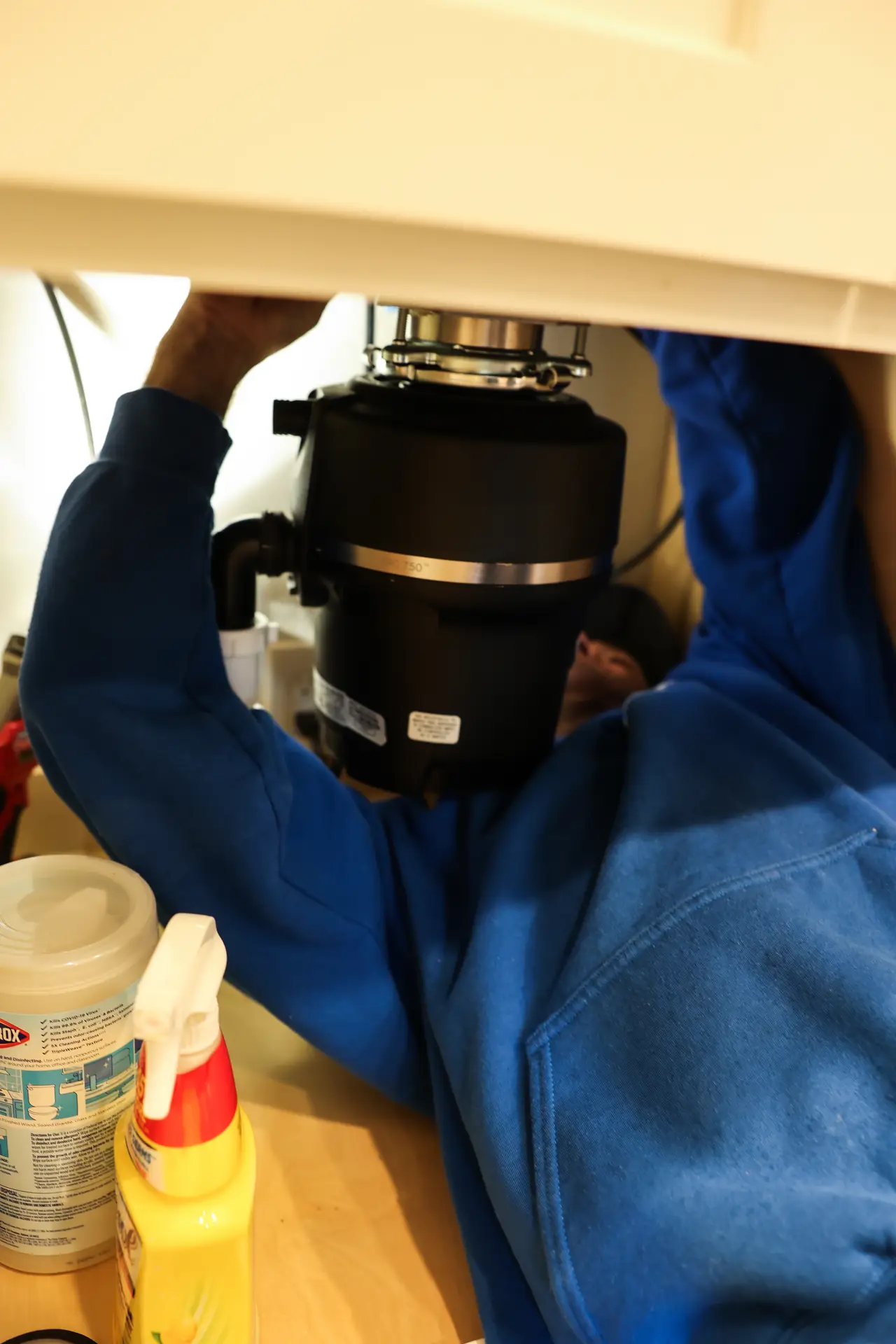
Your disposal hums, clicks, or just goes dead silent, and now you're standing at the sink wondering if this is a five-minute fix or the start of a bigger bill. It's one of the most-asked questions we hear from homeowners across Santa Maria and the rest of the county, and the honest answer is that it depends on a handful of specific details about your unit and your situation.
A garbage disposal is a small appliance with a big job. It grinds through table scraps, coffee grounds, and everything else you send down the drain, day after day, often without a second thought until it stops working. When it does act up, the decision between repair and replacement isn't always obvious, and guessing wrong can mean paying twice, once for a repair that doesn't hold, then again for the replacement you needed in the first place.
This guide walks through what actually determines whether your disposal is worth fixing, what the repair process typically involves, and when a new unit is the smarter long-term move. It's one of the smaller decisions homeowners across San Luis Obispo face, but getting it wrong can mean paying for the same problem twice.
In this article, you will learn about:
- Signs your garbage disposal needs attention
- Common repairs and what they typically involve
- When replacement makes more financial sense
- What to expect from the repair or replacement process
Keep reading to figure out whether your disposal has more life in it or whether it's time to let it go.
Signs your garbage disposal needs attention
Most disposal problems announce themselves clearly if you know what to listen for. The unit doesn't fail silently very often. Instead, it gives off a specific sound, smell, or behavior that points toward what's wrong underneath the sink, and catching those signals early can save you from a bigger repair down the road.
The trick is learning to tell the difference between a minor hiccup and a sign that the whole unit is on its way out. A jammed disposal and a dying motor can sound almost identical at first, a low hum with no grinding, but they point to very different next steps.
That hum with no grinding usually means a jam, not a dead motor
A persistent humming sound with no actual grinding action is one of the most common calls we get, and it almost always means the motor is trying to run but something is physically blocking the flywheel. A stray fruit pit, a bottle cap, or a piece of glass can wedge itself against the impeller and stop the whole mechanism cold.
This is usually one of the easier problems to diagnose from the sound alone. The motor still has power and still tries to spin, it's just fighting something solid in its path.
- Cut power at the breaker or unplug the unit before reaching underneath it.
- Use an Allen wrench in the bottom center hole to manually rotate the flywheel and dislodge the object.
- Once it spins freely by hand, restore power and run water while testing the disposal briefly.
If turning the flywheel by hand doesn't free it, or if the hum continues after a manual reset, the blockage may be more deeply lodged or the motor itself may be struggling, and that's a good point to bring in a professional rather than keep forcing it.
A tripped reset button that won't stay reset points to overheating
Every disposal has a small red reset button on the bottom of the unit, and it trips as a safety measure when the motor overheats. A single trip after grinding something tough is normal. A reset button that keeps popping within minutes of pressing it is not.
Recurring trips usually mean the motor is working harder than it should, either because of a persistent jam, a failing capacitor, or a motor nearing the end of its service life. Letting the unit sit for fifteen minutes to cool before resetting again is standard practice, but if the pattern repeats across several attempts, that's a signal worth having looked at professionally.
Leaks, burning smells, and grinding metal are the signs that matter most
Some symptoms carry more weight than others and deserve faster attention. A persistent burning smell, even a faint one, usually means the motor windings themselves are damaged, which is not something that gets better on its own. Leaking from the bottom of the unit almost always traces back to a cracked housing, and that housing cannot be patched or resealed.
- A kitchen sink backing up after you run the disposal often points to a clogged drain line downstream rather than the disposal itself.
- Rattling or metal-on-metal grinding sounds can mean the impellers or flywheel have loosened or worn down.
- A burning smell paired with the unit stalling out mid-cycle usually means the motor has already sustained real damage.
A lot of homeowners call for a repair that turns out to be a two-minute fix once a technician gets eyes on it, and just as many calls turn into a replacement conversation once we see what's actually happening inside the housing. If the slow drain turns out to be the real culprit, a routine drain cleaning sometimes resolves the whole complaint without touching the disposal at all.
Common repairs and what they typically involve
Not every disposal problem requires a new unit. Plenty of issues are mechanical, isolated, and genuinely repairable without touching the motor or the core housing. A same-day disposal repair visit usually clears these up without any talk of replacement at all.
Clearing a jam is usually the fastest and cheapest fix
Jams are the most common repair call we get, and they're usually the least expensive to resolve. A utensil, a fruit pit, or a wad of fibrous vegetable peels gets wedged against the impeller, the motor senses resistance, and the unit either hums without grinding or trips its internal breaker entirely.
Clearing this typically takes a plumber only a few minutes once the power is confirmed off. The process is mechanical, not electrical or motor-related, which is exactly why it's such an affordable fix compared to almost anything else that can go wrong with a disposal.
Seals, switches, and splash guards are all worth repairing rather than replacing
Beyond jams, several other issues show up regularly and generally respond well to repair rather than replacement. These are external, serviceable parts rather than anything inside the sealed motor chamber, which is the real dividing line for this whole decision.
- 1Leaking seals or gaskets around the sink flange, a job that overlaps with the kind of leak detection work plumbers do under sinks generally.
- 2A loose electrical connection at the wiring compartment, which can cause intermittent power or a dead unit that suddenly works again, similar to what causes an intermittent faucet to drip only sometimes.
- 3A worn splash guard, which lets water and debris escape around the edges and usually just needs a straightforward swap during a routine sink repair visit.
- 4A tripped reset button caused by a one-time overload, which resolves once the blockage is cleared and the unit cools down.
- 5Dull or slightly misaligned impellers, which sometimes can be adjusted rather than replaced outright.
Each of these repairs shares a common trait: the core motor and grinding chamber are still intact. When the problem is external, a seal, a switch, a blockage, a repair almost always makes sense and costs a fraction of a new unit.
A repair that keeps needing another repair is a warning sign on its own
When the problem originates inside the sealed motor housing itself, the calculation changes fast, because that housing generally can't be opened and serviced the way other plumbing fixtures can. A plumber walking you through general plumbing repairs like this should be able to explain, in plain terms, exactly what's being fixed and why it will hold.
If a technician can't point to a specific mechanical cause, or keeps suggesting repeat visits for the same symptom, that's usually a sign the unit's underlying problem is bigger than a single part. At that point, the honest recommendation often shifts from repair to replacement, even if the first visit started as a repair call.
When replacement makes more financial sense
At some point, repair stops being the economical choice, even if it's technically possible. Garbage disposal motors are sealed units, which means a burned-out motor or a corroded internal housing generally can't be rebuilt the way a sump pump motor sometimes can.
Age plays a significant role in this decision too. A unit that's several years old and showing its first real mechanical issue is a different conversation than one that's brand new and jammed on a fruit pit.
The sealed motor is the real dividing line between repair and replacement
Once the problem lives inside that sealed chamber, a burned-out winding, a seized bearing, a corroded internal housing, replacement is usually the only real option on the table. There's no access panel to open and no individual part to swap the way there is with an external seal or switch.
Garbage disposals are common enough in American kitchens that most manufacturers and plumbers treat them as a genuinely wear-driven appliance rather than something meant to last indefinitely. Food waste makes up a substantial share of what ends up in U.S. landfills each year, and the U.S. Environmental Protection Agency has reported that more than 35 million tons of it were landfilled in a recent year, over a quarter of all municipal solid waste sent there. A working disposal is one small way households keep some of that volume out of the waste stream in the first place.
Older units tend to fail again shortly after a first repair
Older units also tend to be less efficient, noisier, and more prone to a second failure shortly after a first repair, not unlike the warning signs that show up before a water heater finally gives out. A motor that has been running for years is closer to the natural end of its working life, and a repair on an aging unit often buys a few more months rather than a few more years.
There's also a straightforward cost comparison worth running before committing to any repair. A basic rule many technicians use, sometimes called the half-cost guideline, weighs the repair estimate against the price of a comparable new unit and factors in how much useful life the current disposal likely has left.
- If the repair cost is a small fraction of a new unit's price and the disposal is relatively young, repair is almost always the better call.
- If the repair addresses a motor or housing issue and the unit is already several years into its service life, replacement usually pencils out better.
- If you've already paid for one repair on the same underlying issue within the past year, that's a strong signal the unit is nearing the end of its useful life regardless of what the next estimate says.
- If the unit is noticeably underpowered for your household's usage, even after a repair, an upgrade to a higher horsepower model may solve a problem repair never will.
A replacement can also fix problems a repair never could
Beyond the numbers, there's a practical side to this too. Upgrading to a new unit often means better grinding power, quieter operation, and improved corrosion resistance, especially relevant if your household deals with the area's harder water or an older, less efficient original installation.
A new disposal is also a chance to correct any sizing mismatch from the original build, since undersized units are a common source of recurring jams in older Central Coast homes. If your current unit has always felt underpowered, no amount of repair work will fix that, only a properly sized replacement will.
What to expect from the repair or replacement process
Whether you're headed toward a repair or a full swap, knowing what the visit itself looks like takes some of the uncertainty out of the decision. A straightforward jam clearing or seal repair is typically quick, often resolved within the same appointment.
Replacement is a bit more involved but still generally a same-day job for most residential installations. The process usually includes disconnecting the old unit, checking the mounting assembly and electrical connections for wear, and confirming the new unit is properly sized for your household's typical usage.
A repair visit is usually done in a single trip
Most repair calls follow a predictable pattern. The plumber confirms the specific cause, whether it's a jam, a seal, or a loose connection, tests the fix under real running water, and walks through what caused the issue in the first place so you can avoid a repeat visit.
For jams specifically, the plumber will often show you how to check the reset button and manually clear a future blockage yourself, since that's the kind of issue you can often handle without a service call once you know the steps.
A replacement involves a few extra checks along the way
- The plumber disconnects power to the unit and removes the old disposal from the sink flange mounting.
- The mounting assembly, dishwasher connection, and drain trap are checked as part of the broader kitchen plumbing inspection that comes with a new install.
- The new unit is secured, wired, and connected to the existing plumbing.
- The system is tested with running water to confirm there are no leaks and the grind cycle runs smoothly.
- The plumber walks through basic care, like running cold water during use and avoiding fibrous scraps, to help the new unit last.
A few practical steps before your appointment can make the visit faster and give you a more accurate quote. Clear out the cabinet under the sink so there's room to work, and if you know the brand or model of your current unit, have that information ready.
Mention anything else going on with the sink while you're at it
It also helps to think beyond just the disposal itself. If your kitchen sink has been draining slowly on top of the disposal issue, mention it up front, since a slow drain can sometimes mask or worsen a disposal problem, and addressing both at once saves you a second visit.
The same goes for any recent changes, like a water line modification or a new dishwasher installation, that could be affecting how the disposal handles its workload. A plumber looking at the whole picture, not just the symptom you called about, tends to catch these connections before they turn into a second appointment.
Conclusion
Deciding between repairing and replacing your garbage disposal really comes down to where the problem lives and how much life the unit has left. External issues like jams, worn seals, and loose connections are almost always worth fixing. Problems inside the sealed motor housing, especially on an older unit, usually point toward a new installation instead.
There's no universal right answer here, and a second opinion from someone who isn't guessing matters more than trying to diagnose it yourself. A quick inspection can tell you definitively whether you're looking at a simple fix or a unit that's reached the end of its useful life.
If your disposal is acting up and you're not sure which way to go, the team at Drain Doctors Plumbing can take a look, walk you through exactly what's happening, and give you a straightforward recommendation based on what actually makes sense for your kitchen and your budget.