
Anyone searching for a sewer line replacement cost guide is usually hoping for one clean number, and that number genuinely does not exist. Sewer line replacement cost depends on so many site-specific variables that two homes on the same street can land on completely different estimates for what looks like the same job.
That is not a dodge. It is the honest reality of underground work. What is under the ground, how deep it sits, what is built on top of it, and how much of the line actually needs attention all shift the final number more than most homeowners expect going in.
This guide walks through the real factors that drive a sewer line replacement estimate, why repair and replacement are priced so differently, what is specific to San Luis Obispo County, and how to make sure whatever number you receive is based on an actual look at your line rather than a guess over the phone.
Whether your home sits closer to Santa Maria or somewhere else in the county, these same factors apply. That holds just as true in San Luis Obispo itself, though the specific number always comes down to what a plumber finds once they are actually looking at your pipe.
In this article, you will learn about:
- So what actually determines what you'll pay for a sewer line replacement?
- Repair or full replacement, and why that changes the number
- The San Luis Obispo County factors that move your estimate
- How to get an accurate number instead of a guess
Keep reading to understand exactly what drives that number up or down before you ever sit down with a plumber.
So what actually determines what you'll pay for a sewer line replacement?
There is no single price for sewer line replacement because there is no single kind of sewer line job. The same phrase covers everything from a short, shallow, easy-access repair to a long, deep run under a driveway, and those two jobs have almost nothing in common cost-wise.
Understanding the actual variables at play makes it much easier to have a productive conversation with a plumber instead of comparing two unrelated numbers.
Pipe length and depth change everything
A longer run of pipe simply requires more material, more labor, and more time, which is the most intuitive factor on this list. Depth matters just as much, since a line buried four feet down takes considerably more excavation effort than one sitting close to the surface, and depth tends to increase the further the line runs from the house toward the street connection.
A few length and depth factors tend to shape the scope of a job most:
- The total distance from the house connection to the street or property line
- How deep the line sits, which can vary significantly even within one neighborhood
- Whether the line runs in a straight path or has multiple bends and connections
- The slope of the property, which affects both depth and drainage requirements
Older homes sometimes have unusually deep laterals due to how the original neighborhood grading was done, which is one of the first things a plumber checks before giving any kind of estimate. Homes across Paso Robles and other inland communities with rolling terrain often see more depth variation than flatter coastal lots.
Material matters as much as the hole in the ground
The material being replaced, and the material replacing it, both affect the final number. Older clay, cast iron, or Orangeburg pipe often comes out in worse condition than expected once excavation begins, which can change the scope of work partway through a project. Modern PVC pipe is generally more straightforward to install and connect than older materials were to remove.
Galvanized pipe replacement in older Central Coast homes follows a similar logic on the water supply side of a home, where material age and condition drive the scope of the job just as much as they do underground on the sewer side. Recognizing when a home needs a repipe often comes up in the same conversation as sewer line condition, since both tend to trace back to the same era of original construction.
Access, and what's sitting on top of the line
What sits above the sewer line has a real effect on cost. A line running under an open lawn is straightforward to access. A line running under a driveway, a mature tree's root system, a patio, or close to a foundation requires more careful, and often more expensive, excavation work to reach safely.
A few access conditions consistently affect how a job gets scoped:
- Hardscape sitting directly over the line, such as concrete, pavers, or asphalt
- Mature trees near the excavation path that require careful root management
- Limited equipment access due to narrow side yards or tight property lines
- Utility lines running near the sewer line that require locating before digging
Some of these conditions add real time and complexity to a job. Others simply require extra care rather than extra cost, which is part of why a proper site visit matters more than a phone estimate for this kind of work. This shows up often in older sections of Morro Bay, where narrow lots and mature landscaping both come into play.
Repair or full replacement, and why that changes the number
Not every sewer line problem requires a full replacement, and confusing the two leads to wildly different cost expectations. A targeted repair and a full-line replacement are different scopes of work entirely.
Knowing which category your situation actually falls into is the single biggest factor in what kind of number you should expect.
When a spot repair is genuinely enough
A single compromised joint, a localized root intrusion point, or an isolated crack can often be addressed without touching the rest of the line, especially when the surrounding pipe is still in reasonably good shape. Sewer line repair or replacement decisions come down to exactly this kind of scope question once the condition of the pipe is actually known.
A spot repair addresses the specific problem area rather than the entire run, which naturally involves less excavation, less material, and less labor than replacing the whole line. It is not automatically the cheaper long-term choice, but it is a legitimately different job than replacement, and pricing them the same way misrepresents what is actually happening underground.
What pushes a job from repair to replacement
Multiple problem points along the same line, widespread deterioration in an old clay or cast iron system, or a line that has needed repeated repairs in the past few years all point toward replacement being the more sensible long-term choice, even if a spot repair would technically hold for now.
A camera inspection typically surfaces a consistent set of red flags that push a job toward full replacement:
- Root intrusion or cracking found at more than one point along the line
- Visible sagging or bellying in the pipe that traps waste and water
- Pipe material that has deteriorated to the point of losing structural integrity
- A documented history of repeated repairs on the same section
A camera inspection is usually what settles this question, since it shows whether a problem is isolated or spread across the run. Deciding between sewer line repair and replacement covers this exact decision process in more depth. The underlying logic holds true anywhere in the county, including similar situations that come up in Atascadero.
Why partial fixes sometimes cost more long-term
Repairing the same section of an aging line multiple times over several years can eventually add up to more than a single full replacement would have, simply because each repair is its own mobilization, excavation, and labor cost. This is not true in every case, but it is common enough with genuinely old infrastructure that it is worth factoring into the decision.
This is exactly why a plumber who has looked at the whole line, not just the immediate problem spot, is in a better position to advise on repair versus replacement than a phone estimate ever could be.
The San Luis Obispo County factors that move your estimate
Local conditions add their own layer on top of the general factors above. San Luis Obispo County has a specific mix of housing stock, terrain, and permitting requirements that shapes how these jobs typically go.
Knowing what is common locally helps set realistic expectations before a plumber even arrives.
Older neighborhoods and the infrastructure they're built on
A meaningful share of homes across the county still have their original clay or cast iron sewer lines in the ground, decades after installation. Aging pipe infrastructure is a widely documented national issue, not just a local one. Research hosted by the University of Houston on sewer pipe condition found that roughly 36 percent of the U.S. cities surveyed by the EPA had reported sewer pipe collapses, most linked to corrosion in aging pipe materials.
That national pattern shows up locally in a very practical way: a home with original infrastructure from the 1960s or earlier is simply working with different risk and cost assumptions than a home built with modern PVC plumbing. This is a familiar picture in older parts of Arroyo Grande and similar established neighborhoods throughout the county.
Permits and inspection requirements county-wide
Sewer line work almost always requires a permit, and permit requirements can add both time and cost to a project depending on the jurisdiction and the scope of work involved. This is not unique to San Luis Obispo County, but it is a real factor that a phone quote often glosses over entirely.
Permit and inspection requirements typically cover a consistent set of items:
- 1A permit application filed with the relevant local jurisdiction before work begins
- 2An inspection of the excavation and pipe placement before the trench is backfilled
- 3A final inspection confirming the work meets current plumbing code
- 4Documentation that may be relevant later, particularly for a future home sale
California's point-of-sale sewer lateral inspection law makes this documentation especially relevant for homeowners who may sell in the coming years, since a properly permitted and inspected replacement avoids complications that an undocumented repair can create later.
Why every quote here starts with a camera, not a guess
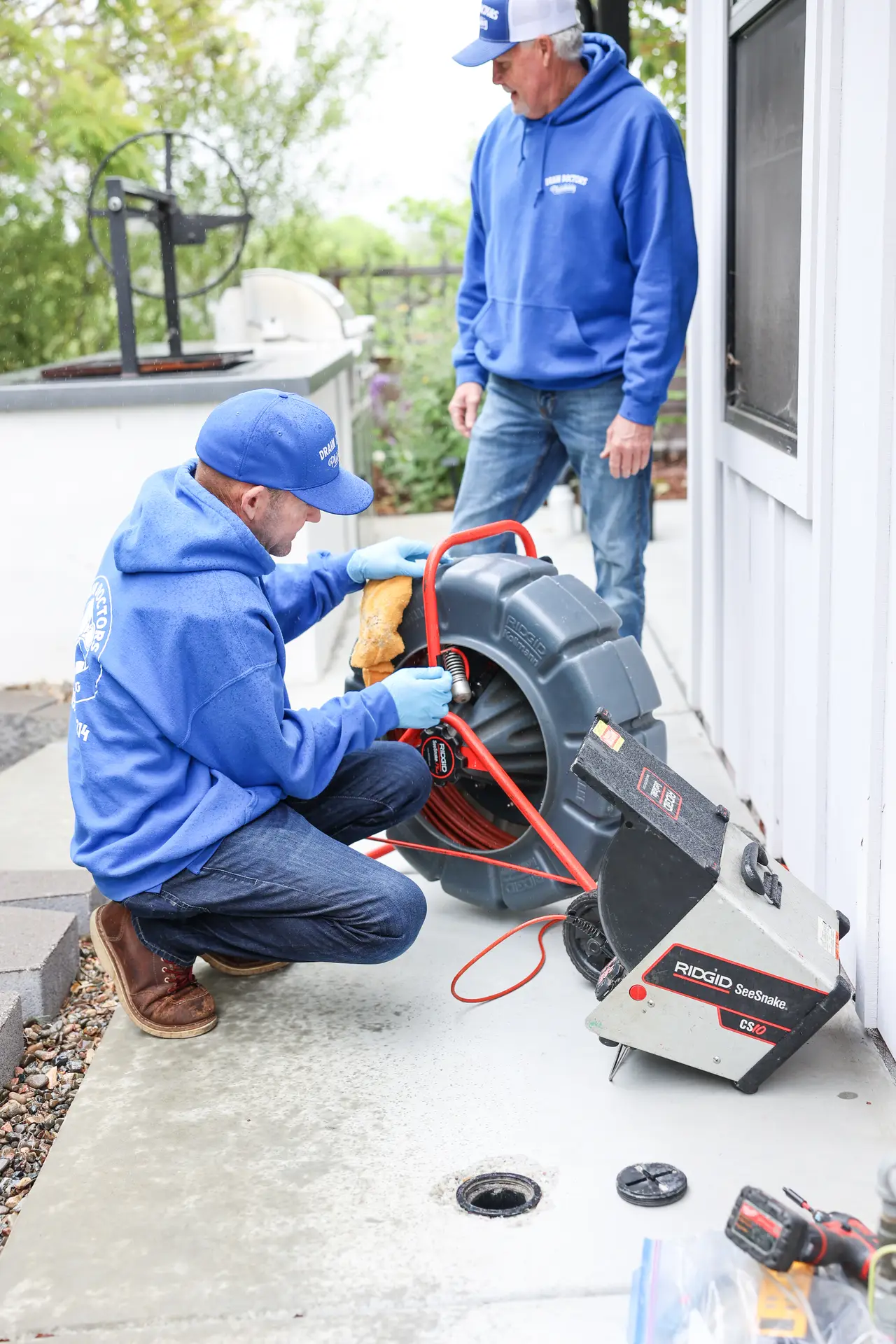
Because so much of the cost picture depends on what is actually happening underground, a serious estimate for sewer line work should always start with a sewer camera inspection rather than a phone conversation. Guessing at pipe condition, material, or the scope of the problem leads to estimates that change dramatically once excavation actually begins.
A camera inspection eliminates most of that uncertainty before a shovel ever touches the ground, which is part of why it tends to be the first real step in any legitimate sewer line estimate rather than an optional add-on. Homeowners in Pismo Beach and other coastal communities often find this step alone resolves disagreements between competing bids more than anything else in the process.
How to get an accurate number instead of a guess
Because so many variables affect the final cost, the only reliable way to get an accurate number is a proper, in-person evaluation of your specific line. Anything short of that is an educated guess at best.
Knowing what a legitimate estimate process actually looks like helps you tell the difference between a thorough evaluation and a rushed one.
What a real estimate actually includes
A serious estimate typically starts with the camera inspection discussed above, followed by a discussion of what the footage revealed, what scope of work makes sense given that condition, and what access challenges the specific property presents. Pricing then reflects that specific combination of factors rather than a generic per-foot number applied blindly to every job.
Pipe repair and whole-home repiping work follows a similar evaluation-first approach on the water supply side, and the same principle applies here: the number should follow the inspection, not come before it. How long a whole-home repipe actually takes depends on nearly identical variables to a sewer line job, which is a useful comparison for homeowners weighing both projects at once.
Questions worth asking before you sign anything
A homeowner comparing quotes benefits from asking a consistent set of questions rather than just comparing bottom-line numbers against each other.
Worth asking before agreeing to any sewer line work:
- Was the quote based on an actual camera inspection of the line
- Does the estimate distinguish between a spot repair and a full replacement
- What happens to the price if the crew finds worse conditions once digging starts
- Are permits and final inspection included in the quoted price
Two quotes that look similar on paper can represent very different scopes of work once these questions are answered, which is exactly why the questions matter more than the number itself at this stage. A general plumber handling routine plumbing repairs and inspections day to day tends to be well positioned to answer these questions clearly, since the same inspection-first logic applies across most of their work.
Red flags that mean a quote is too good to be true
A quote given without ever looking at the actual pipe, whether over the phone or from a quick driveway walkthrough, is not a reliable number. Neither is a quote that seems dramatically lower than every other bid without a clear explanation of what is being done differently.
How often professional drain cleaning is actually needed is a good example of a related question where a rushed, generic answer usually signals a rushed, generic approach to the rest of the job as well. A plumber willing to explain their reasoning, show camera footage, and walk through why the scope is what it is tends to be a far better sign than the lowest number on paper. This holds true whether you are getting quotes in Nipomo or anywhere else across the county.
Conclusion
A real sewer line replacement cost guide cannot responsibly hand you a single number, because the honest answer always depends on pipe material, depth, access, and how much of the line actually needs attention. Anyone who quotes a number without looking at your specific line first is guessing, not estimating.
What you can control is making sure any estimate you receive starts with an actual inspection rather than a phone call, and that it clearly distinguishes between a repair and a full replacement before you commit to either one.
If you want an honest, inspection-based look at what your own line actually needs, the team at Drain Doctors Plumbing can walk you through it, camera footage and all, with no guesswork involved.