
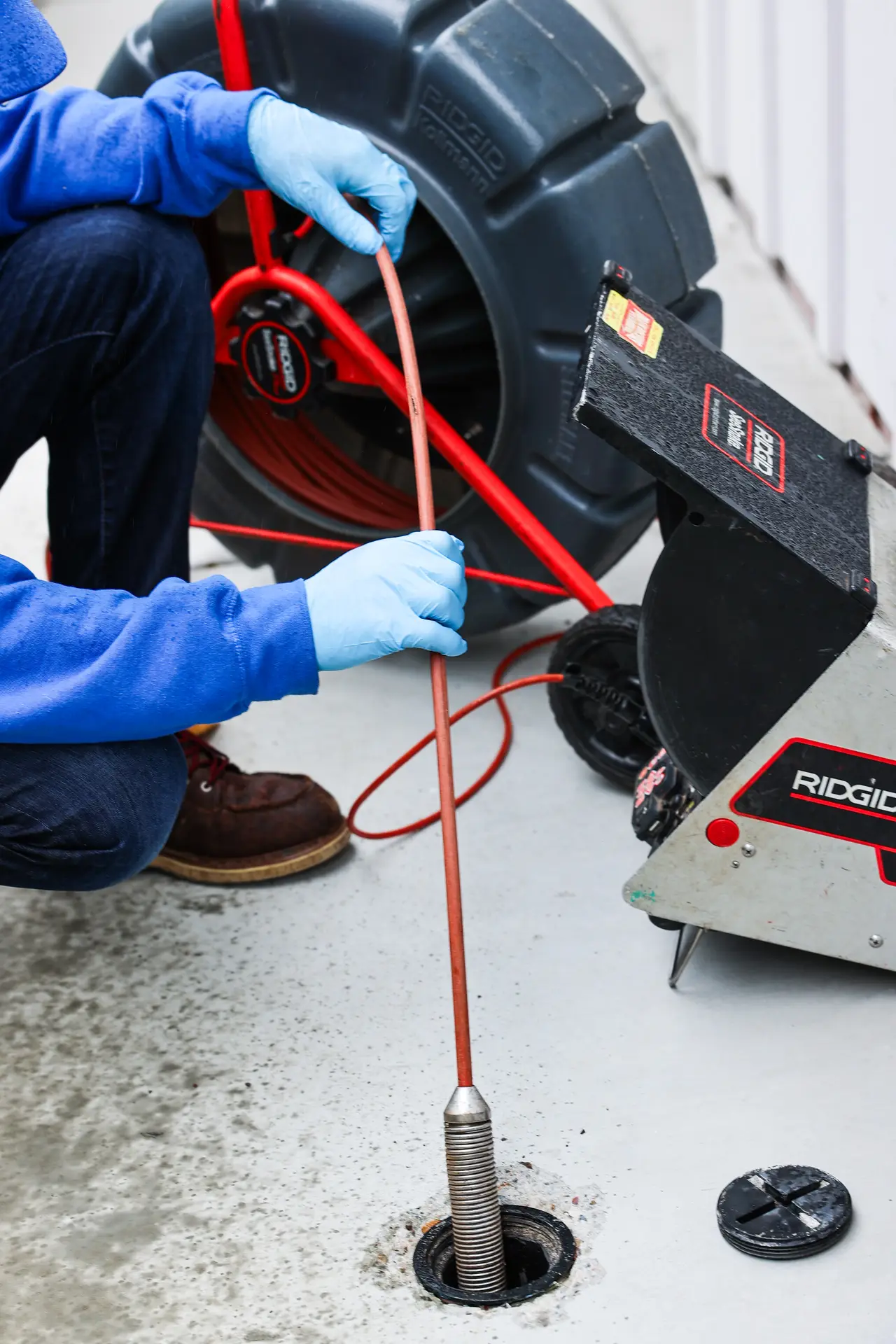
A snake tells you a drain is clear. A jetting pass tells you the water is flowing again. Neither one tells you what's actually happening to the pipe itself, which is exactly the gap a camera closes.
What a sewer camera inspection shows is the difference between guessing at a problem and actually seeing it. Cracks, root intrusion, corrosion, and bellies in the line all stay invisible from above ground, no matter how carefully you watch the water drain.
Our technicians run cameras through residential and commercial lines across San Luis Obispo County every week, and the footage routinely changes the plan for the job. A line that seemed fine after a quick snaking often tells a very different story once a camera goes in.
This article walks through exactly what shows up on that screen, what a camera still can't catch on its own, and how to get the most out of a sewer camera inspection if you're considering one. Here's what the footage actually reveals.
In this article, you will learn about:
- Why a camera catches what other methods miss
- What actually shows up on screen
- What a camera inspection can't tell you
- Getting the most out of your inspection
Keep reading to find out why a camera pass often changes the diagnosis entirely, even on a line that seemed to be working fine.
Why a camera catches what other methods miss
A working drain and a healthy pipe are not the same thing. Water can flow through a line that's cracked, corroded, or half-blocked by roots for months before anything backs up.
That gap between "the water drains" and "the pipe is sound" is exactly where a camera earns its place in the diagnostic process.
What a snake or a jetting pass alone can't tell you
A drain snake clears a physical blockage but tells you almost nothing about the condition of the pipe around it. Jetting does more, scouring the walls clean, but even a clear, freshly jetted line can still be cracked, misaligned, or corroding from the outside in.
Neither method answers the questions that actually matter for a homeowner planning ahead:
- How much life is left in this section of pipe
- Whether roots have already broken through the pipe wall or are just pressing against it
- Whether the pipe has settled or shifted, creating a low spot where water pools
- Whether the material itself, clay, cast iron, or PVC, is holding up as expected for its age
Answering any of those requires actually seeing inside the line, not just clearing whatever is currently blocking it. That's the entire reason camera equipment exists as a separate service rather than an add-on to snaking or jetting.
Seeing the pipe instead of guessing at it
A camera inspection replaces assumption with direct observation. Instead of inferring pipe condition from how fast water drains or how often a clog returns, a technician watches the actual interior surface pass by in real time.
That live view catches details a homeowner would never notice from symptoms alone: a hairline crack that hasn't failed yet, a joint that's slightly offset, or the first thin roots of an intrusion that's still years from causing a full blockage.
When a camera inspection gets recommended
Camera inspections come up most often after a clog that seemed unusually stubborn, before a home purchase, or as part of routine maintenance on an older property. A sewer line repair vs. replacement decision almost always starts with camera footage, since the right fix depends entirely on what the pipe actually looks like inside.
They also come up around real estate transactions more than most homeowners expect. California's point-of-sale disclosure rules in some cities make a lateral inspection part of selling a home, and a camera pass is the only way to satisfy that requirement honestly.
What actually shows up on screen
Once the camera is rolling, the footage reveals a surprising amount of detail about a pipe that looked completely fine from the outside. Some of it is expected wear; some of it is a genuine surprise to the homeowner watching the monitor.
The picture that comes together over a full pass through the line usually falls into a handful of recurring categories.
Root intrusion and how it looks on camera
Root intrusion often starts as a fine, hairlike mass pressing through a joint or a small crack, barely visible against the pipe wall. Left alone, that same intrusion thickens into a dense mat that catches paper, grease, and debris until the line backs up completely.
Older clay and galvanized pipe sections are especially prone to this, since their joints give roots an easy entry point that newer, solvent-welded PVC doesn't offer in the same way. Camera footage shows exactly which joints are affected and how far the roots have spread along the line.
Cracks, bellies, and offset joints
Structural problems show up clearly once the camera reaches them, even when nothing about the symptoms upstairs hinted at a problem this serious. The most common structural findings include:
- Longitudinal or circumferential cracks running along or across the pipe
- Bellies, or low spots where the pipe has sagged and water pools between uses
- Offset joints, where two pipe sections no longer line up cleanly
- Visible corrosion or scaling on the interior wall of metal pipe
Each of these tells a technician something different about how urgent the fix is and what kind of repair actually solves it. A belly, for example, often calls for a different approach than a single cracked joint, even though both can cause similar symptoms upstairs, and either one can eventually point toward a full-home repipe if the damage is widespread enough.
Grease, scale, and the buildup patterns that predict a repeat clog
Buildup on camera looks different depending on its cause, and an experienced technician can usually tell at a glance what's driving a recurring clog. Thick, waxy grease deposits look nothing like the gritty mineral scale that builds up in hard water areas.
That distinction matters for the fix. A grease-heavy line often responds well to a hydro jetting pass, especially in properties like restaurants where the buildup returns on a predictable schedule.
What a camera inspection can't tell you
As useful as the footage is, a camera has real limitations, and a good technician tells you about them rather than overselling what the equipment can do. Knowing where those limits sit helps set realistic expectations for the inspection.
Some of what a camera misses gets caught through other tools or a second pass; some of it simply requires a different approach entirely.
Limits below the waterline
A pipe with standing water in it hides whatever sits beneath the surface, including cracks, sediment, and the true depth of a belly. Cameras built for sewer work handle some water, but a fully submerged section still limits visibility until the water level drops or the line gets cleared first.
This is one reason inspection timing matters. A line inspected right after heavy rain or during a period of unusually high water use may show less than the same line would on a drier day.
A few things commonly stay hidden until conditions improve or the line gets cleared:
- Sediment or debris sitting at the bottom of a belly
- The true depth of a low spot in the pipe
- Small cracks near or below the waterline
- Early root growth still confined to the lower half of the pipe
None of this means the inspection was wasted. It just means a follow-up pass under better conditions sometimes rounds out the picture the first look started.
A technician who flags this limitation upfront is giving you a more accurate read on the line, not a less useful one.
Why some inspections need a cleaning pass first
A line thick with grease, debris, or standing water often needs cleaning before a camera can see anything useful at all. Running the camera through a dirty line mostly shows the technician a wall of buildup rather than the pipe surface behind it.
This is why a drain cleaning or jetting pass frequently comes before the camera inspection rather than after it, even though the camera is often what prompted the visit in the first place. Clearing the line first gives the camera an actual surface to evaluate.
What happens when the footage raises more questions than it answers
Occasionally a camera pass shows something ambiguous, a shadow that could be a crack or could be a shadow, a section that looks offset but might just be a normal bend. In those cases, a technician flags the uncertainty honestly rather than guessing at a diagnosis.
A second pass, a different camera angle, or in some cases a locate-and-mark to confirm exact position on the property can resolve most of these questions. Being upfront about what the footage doesn't fully settle is part of an honest inspection, not a shortcoming of the process.
Getting the most out of your inspection
A camera inspection is only as useful as what happens with the footage afterward. A clear explanation and a documented record turn a one-time look into something you can actually use for years.
Asking the right questions, and scheduling one proactively at the right time, makes the whole service more valuable.
What you'll actually receive afterward
Most inspections come with recorded footage, either on the spot or sent afterward, along with a plain-language summary of what the camera found. A written report should cover:
- 1The overall condition of the line and any sections flagged for concern
- 2The approximate location of any defects, measured from the access point
- 3A recommendation, whether that's monitoring, a pipe repair assessment, or no action needed
- 4Photos or clips of anything worth a closer look later
Keeping that documentation matters beyond the immediate visit. If a problem does develop years later, having a baseline record of the line's earlier condition helps a technician understand how quickly something has changed.
When a camera inspection is worth doing before you have a problem
A camera inspection doesn't have to wait for a backup. Homes changing hands, older properties with original clay or cast iron lines, and properties about to see major landscaping or hardscaping work over the sewer line all benefit from a proactive look.
A few situations are especially worth scheduling ahead of any actual problem:
- Buying or selling a home, particularly one built before the 1980s
- Planning a patio, driveway, or major landscaping project over or near the line
- Noticing mature trees growing close to the sewer lateral
- Coming off a stubborn clog that's already needed two or more service calls
Property owners across Morro Bay, Pismo Beach, and Atascadero with mature trees near their sewer lateral are especially good candidates, since established root systems are the single most common driver of a proactive inspection request.
Catching a developing problem this way almost always costs less than waiting for it to announce itself as a backup.
How the footage shapes what happens next
Every recommendation that follows a camera inspection traces back to something specific in the footage, not a general sense that a line is "getting old." A minor scale buildup might only call for a routine drain cleaning schedule going forward.
A structural finding, on the other hand, moves the conversation toward repair options, and the footage itself becomes the evidence both the homeowner and the technician use to decide how urgent signs of a failing line actually are.
Conclusion
A camera inspection turns a guess into an answer. Instead of assuming a pipe is fine because water is currently draining, you get an actual look at the condition of the line, joint by joint, section by section.
Engineering research from the University of Houston has tracked the country's aging water and sewer pipe network, estimating that the nation's roughly 1,600,000 miles of pipe was on pace to average 45 years old, a reminder that pipe condition deserves a real look rather than an assumption based on age alone.
If it's been a while since anyone has actually looked inside your line, or you're weighing a repair decision without real information, reach out to Drain Doctors and we'll show you exactly what's happening inside your pipe.