A plumbing inspection checklist belongs in every offer you make on a Central Coast home, not just the ones built before 1980. Standard home inspectors walk through a property in a few hours and flag what they can see from the crawl space or under a sink. What they rarely do is run a camera through the sewer line, test static water pressure, or dig into the age of a water heater tucked in a garage corner.
San Luis Obispo County has a lot of charm wrapped around some genuinely old infrastructure. Homes in Nipomo, Arroyo Grande, and parts of downtown San Luis Obispo still carry galvanized supply lines or clay sewer laterals that have outlived their useful life by decades. None of that shows up on a disclosure form unless someone actually looks.
This checklist walks through what a plumbing-specific inspection actually covers, system by system, so you know what questions to ask before you remove contingencies. It also explains the one California-specific inspection issue that can affect your closing timeline if nobody mentions it to you.
A plumbing-focused walkthrough catches what general home inspections are not built to catch, and it only takes a few hours to schedule inside your contingency period.
In this article, you will learn about:
- Why a plumbing inspection matters before you close escrow
- Checking the systems you can actually see
- What's happening underground
- Rounding out the checklist: gas, drains, and who to call
Keep reading to walk into your closing with a clear picture of what you're actually buying.
Why a plumbing inspection matters before you close escrow
Most purchase contracts give you a short contingency window to investigate the property before your deposit becomes harder to walk away from. That window is tight for anything beyond a general inspection, which is exactly why plumbing often gets skipped.
A plumbing-specific inspection costs a few hundred dollars and can save you tens of thousands if it catches a sewer or repiping issue early. The three sections below cover why this step matters most on the Central Coast.
California's sewer lateral law and what it means for buyers
California does not have a single statewide law requiring sewer lateral inspections at the point of sale, but a growing number of Central Coast cities and sanitation districts do. Some require a camera inspection and a compliance certificate before the sale can close, and the cost of any required repair typically falls on the seller unless the contract says otherwise.
If the property you're buying falls under one of these ordinances, local sewer lateral rules determine who pays for repairs and how much time you have to complete them. Agencies that enforce these ordinances typically require a certified camera inspection of the lateral before they'll sign off on the sale.
Ask your real estate agent whether the city or sanitation district where the home sits has an active lateral ordinance before you waive your inspection contingency. If one exists, request the compliance documentation directly from the seller rather than assuming it's included in the disclosure packet.
What a general home inspector usually misses
A general home inspector checks that fixtures run and drains empty, but they are not plumbers. They are trained to spot visible water damage, not necessarily to diagnose why a toilet keeps clogging or whether a water heater is nearing the end of its service life.
An inspector who flags "evidence of prior leak" on a report has done their job, but someone still needs to find out whether that leak is resolved or ongoing, and that often takes someone with actual plumbing training to look closer.
A few things that typically fall outside a standard inspection's scope include:
- Static water pressure testing
- Sewer camera inspection of the main line
- Water heater age verification against the manufacturer's data plate
- Gas line pressure and connection checks
- Isolation testing for slow drains throughout the house
None of these are exotic tests. A licensed plumber can usually run through all five in a single visit, often for less than the cost of a week of utility bills in a home with a hidden leak.
Request these as an addendum to your inspection rather than assuming your general inspector already covers them. Most inspection companies are upfront about what is and isn't included if you ask directly.
The real cost of skipping a plumbing-specific inspection
Skipping a plumbing inspection does not make the underlying problems disappear, it just moves the bill to after closing, when you no longer have leverage to negotiate repairs or a price reduction.
A sewer line replacement in San Luis Obispo County runs into five figures depending on the length and depth of the dig. A new water heater installation costs far less, but it is not an expense most buyers want to discover in their first month. Skipping the inspection does not prevent these costs, it only removes your ability to negotiate them into the sale price.
Buyers who request a plumbing inspection and find a problem are in a far stronger negotiating position than buyers who find the same problem after the keys change hands. Sellers would often rather credit a few thousand dollars toward repairs than lose the sale outright, especially in a market where Central Coast inventory moves quickly.
Checking the systems you can actually see
Not every plumbing check requires a professional with a camera. Some of the most useful information is sitting in plain sight, in the garage, under the kitchen sink, or on the side of the house where the main shutoff valve lives.
The three areas below are worth walking through yourself before your inspection period closes, even if you plan to also bring in a licensed plumber.
Water heater age and the clock you can't see ticking
Every water heater has a manufacture date stamped on its data plate, usually near the top of the tank, and it tells you more than the listing agent ever will. Most tank water heaters last eight to twelve years before they start failing, and a unit already past that mark is a renegotiation point, not a footnote.
A handful of physical signs point to a tank nearing the end regardless of its exact age. Signs that a water heater is about to fail include rust-colored water, a popping or rumbling sound during heating, and moisture pooling at the base of the tank.
Walk through these during any showing where the water heater is accessible:
- Rust-colored or metallic-smelling hot water
- Popping, rumbling, or banging sounds during a heating cycle
- Moisture or standing water at the base of the tank
- A pilot light that will not stay lit, on gas units
- A tank older than the manufacturer's rated lifespan
Tankless units sidestep some of these failure modes, but they are not immune to hard water damage. On the Central Coast, mineral buildup is a real factor, since hard water shortens the working life of both tank and tankless systems if the unit was never descaled.
Ask the seller for maintenance records or a receipt from the last flush if the home has a tankless system. A unit with no service history is one you should plan to have professionally descaled shortly after closing, regardless of what the inspection finds.
Toilets, faucets, and fixtures worth testing yourself
A few minutes with the toilets and faucets during a showing can tell you a lot about the condition of a home's plumbing overall. A toilet that keeps clogging even with normal use often points to a venting problem or a partial blockage further down the line, not just an old toilet.
A running toilet is a smaller issue but still worth asking about, since a worn flapper can quietly drive up a water bill every month until someone replaces it. Faucets deserve the same attention: look for mineral crust at the aerator, slow drips at the base, and handles that feel loose or gritty when turned.
Walk through this short list at any showing you're serious about:
- 1Flush every toilet and listen for a running tank afterward
- 2Run hot and cold water at every sink for at least thirty seconds
- 3Check under sinks for water stains, swollen cabinet wood, or active drips
- 4Test shower and tub drains for slow draining
- 5Note the age and condition of any visible supply lines
None of this replaces a licensed inspection, but it gives you language to use when you talk to your plumber or request specific items in a repair addendum. A seller who already knows a toilet has been clogging repeatedly is more likely to agree to a credit before you ever schedule the professional visit.
If a home has a bathroom remodel underway or recently finished, treat bathroom plumbing work as its own line item in your inspection request, since remodel plumbing sometimes gets rushed ahead of a sale.
Water pressure as an early warning sign
Water pressure is one of the simplest things to check and one of the most revealing. Pressure that swings wildly between fixtures, or that is noticeably weak at the second floor, often points to a problem with the main line itself rather than anything wrong with an individual tap.
On the other end of the spectrum, pressure that feels unusually strong can be just as damaging over time. Water pressure that runs too high stresses fittings, water heater tanks, and appliance connections well before anyone notices an obvious leak.
Testing pressure yourself takes about five minutes with an inexpensive gauge from a hardware store:
- 1Turn off all fixtures and appliances that use water
- 2Screw the gauge onto an outdoor hose bib
- 3Turn the bib fully open and read the static pressure
- 4Compare the reading against a healthy range of roughly 40 to 80 psi
- 5Note anything outside that range for your plumber to investigate further
A reading outside the normal range does not always mean an expensive repair. Sometimes a pressure regulator just needs adjustment or replacement, which is a far smaller job than repiping a house.
If the home's pressure has suddenly changed according to the seller, treat that as a flag worth investigating rather than a throwaway comment. A sudden drop especially is often the first sign of an underground leak that hasn't surfaced yet.
What's happening underground
Nothing on this checklist matters more than what's happening below the yard, since underground plumbing is the most expensive category to fix and the easiest to miss during a standard walkthrough.
San Luis Obispo County's mix of older homes, mature trees, and varied soil conditions means underground issues show up more often here than in newer developments further inland.
Sewer camera inspection: the one test that doesn't lie
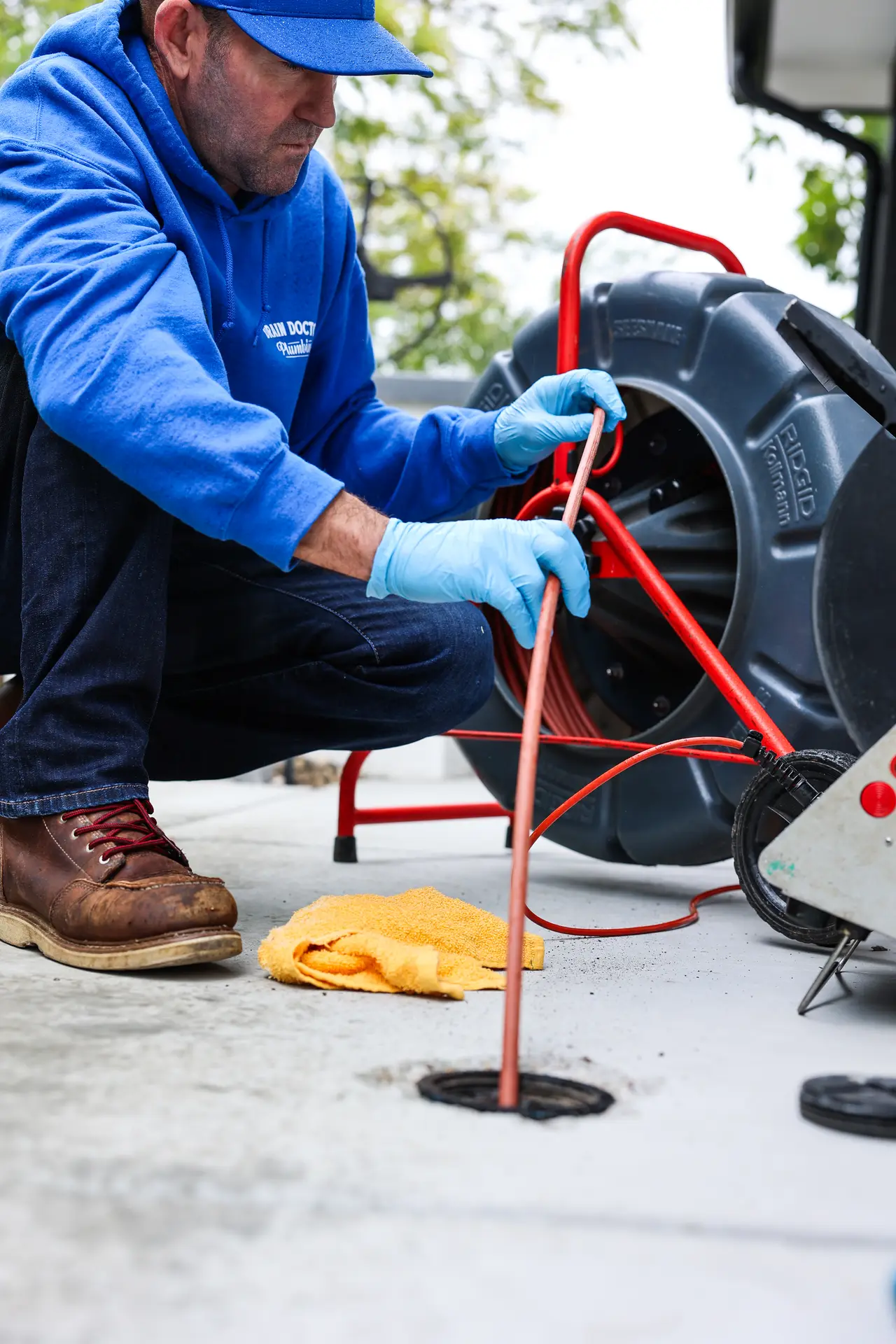
A sewer camera inspection is the single most valuable test you can request before buying an older Central Coast home. A small camera travels the length of the sewer lateral and shows exactly what condition the pipe is in, rather than guessing from the age of the house.
Many real estate agents never bring this up, so buyers are increasingly requesting a sewer scope before buying an older Central Coast home on their own.
A camera inspection typically turns up one of a handful of recurring issues:
- Root intrusion at pipe joints
- Bellied sections where the pipe has sunk and collects standing water
- Cracked or collapsed clay and cast iron sections
- Old, undersized pipe diameters that struggle with modern water use
- Offset joints from decades of soil movement
Most of what shows up during a camera inspection falls into one of these categories, and a good plumber can usually tell you on the spot whether a finding is cosmetic or urgent.
Expect to pay a few hundred dollars for the inspection itself, and treat it as cheap insurance against a line that might otherwise fail within a year or two of your move-in date.
Tree roots, bellies, and aging pipe materials
Mature trees are one of the best things about Central Coast neighborhoods and one of the worst things for old sewer laterals. Roots find their way into pipes through the smallest crack or joint gap, and once inside they grow fast enough to block the line within a couple of seasons.
Pipe material matters just as much as root activity. Homes built before the 1970s in this area often still run on galvanized steel supply lines that corrode from the inside out, narrowing the pipe and starving fixtures of pressure over time.
The material underneath an older Central Coast home tends to fall into one of these categories:
- Galvanized steel supply lines, prone to corrosion and reduced flow
- Orangeburg sewer pipe, a wood-pulp material common in mid-century homes
- Clay sewer laterals, prone to root intrusion and joint separation
- Cast iron drain lines, prone to rust-through after several decades
- Polybutylene supply lines, prone to failure at the fittings
If a seller can't say what material the home's pipes are made of, treat that as a reason to request a camera inspection rather than taking their word that everything is fine. A galvanized pipe replacement is a known, budgetable project, while a surprise failure six months after closing is not.
If disclosures mention a repipe, ask when it happened, how long the work took, and whether a permit was pulled. A whole-home repipe typically takes several days depending on the size of the house, so a suspiciously fast turnaround is worth double-checking with the seller.
Water line condition and leaks you'll never see from the yard
A failing water line rarely announces itself with a puddle in the yard. More often, the first clues are a higher-than-usual water bill, a damp patch of lawn that stays green through a dry month, or a faint hissing sound near the meter, all signs that an underground line is already leaking.
If you notice any of these during a showing, don't assume it's irrigation runoff and move on. Ask directly whether the main water line has ever been repaired or replaced, and request the paperwork if the seller says yes.
Older galvanized and cast iron water mains fail gradually rather than all at once, which is part of why they're easy to miss during a quick walkthrough. A line that's already thin from corrosion can seem fine right up until it isn't.
The good news is that modern techniques mean far less digging in the yard than a water line repair used to require. That's a meaningful difference for anyone weighing whether a bad water line is a dealbreaker or a manageable repair.
Rounding out the checklist: gas, drains, and who to call
The last stretch of the checklist covers the systems that don't get much attention until something goes wrong: gas lines, drains, and garbage disposals. None of these are glamorous, but all three show up often enough in local service calls to earn a spot here.
By the time you finish this section, you'll have a complete list to bring to your plumber or your own final walkthrough.
Gas line safety before you move in
Gas line problems are rare but serious enough that they belong at the top of any checklist. The clearest signs of a gas leak include a sulfur or rotten-egg smell near appliances, a hissing sound near a gas meter or connection, and dead or discolored vegetation above a buried line.
If you smell gas during a showing, leave the house immediately and call the gas utility from outside, not your real estate agent. That's an emergency situation, not an inspection checklist item.
Beyond the obvious red flags, ask whether gas lines have been inspected recently, especially in homes more than thirty years old. Older flexible connectors and corroded fittings are common findings that a gas line inspection catches before they become a hazard.
Drain and disposal performance across the house
Slow drains are easy to dismiss as a minor annoyance, but a pattern across multiple fixtures usually points to something bigger than a single clogged trap. If every sink and tub in the house drains slowly, the main line itself may be partially blocked rather than each fixture having its own separate problem.
Grease and mineral buildup are the usual suspects on the Central Coast, and the fix ranges from a simple drain cleaning to a more involved hydro jetting session for a line that's been neglected for years.
Run through these quick checks at any showing where you can access the kitchen and bathrooms:
- Run water in every sink for a full minute and watch the drain speed
- Flush every toilet and confirm it clears on the first try
- Turn on the garbage disposal and listen for grinding versus humming
- Check under the kitchen sink for moisture near the disposal unit
- Ask when drains were last professionally cleaned, if ever
A disposal that strains to turn or refuses to engage often just has a jammed impeller, which is a quick fix compared to a full disposal replacement. One that smells persistently bad despite regular use may be nearing the end of its service life regardless of how it sounds.
None of these are dealbreakers on their own. They're simply items worth noting so you walk into negotiations, or your first service call after closing, with a realistic sense of what to expect.
Turning your findings into a final checklist
By now you have a long list of things to check, verify, or ask the seller about. The goal isn't to scare yourself out of a good house, it's to walk into closing with clear eyes about what you're buying and what you might need to budget for afterward.
The average American home also loses more water than most owners realize before anyone even looks for a specific leak. Roughly 10% of homes have a leak wasting 90 gallons of water or more every day, according to the U.S. Environmental Protection Agency, often with no obvious sign beyond a higher water bill.
A licensed plumber can usually confirm or rule out most of the items on this checklist during a single scheduled visit, which is far cheaper than discovering any of them after closing. Drain Doctors Plumbing serves homeowners and buyers throughout San Luis Obispo County, including:
If your plumbing inspection turns up a water heater near the end of its life, a water heater replacement is usually scheduled separately, often timed to right after closing rather than before. The same scheduling logic applies to larger jobs like a full repipe or a leak detection visit, since both are easier to plan once you're not racing a closing deadline.
Whatever the inspection finds, get it in writing, and don't rely on verbal assurances from a seller or their agent. A short, specific punch list is what actually protects you if something was missed or misrepresented before closing.
Conclusion
A plumbing inspection checklist will not catch everything a house might need over the next twenty years, but it catches the expensive surprises that actually affect your offer and your budget this month. The sewer line, the water heater, the pressure in the pipes, these are knowable things before you ever sign closing paperwork.
Central Coast homes carry real character, and plenty of that character comes from age. That is not a reason to walk away from a house you love, it is simply a reason to walk in with a clear picture of what you are buying and what it might need soon.
If you are under contract or about to make an offer on a home anywhere from San Luis Obispo to Paso Robles, a plumbing-specific inspection is worth scheduling before your contingency period closes. Drain Doctors Plumbing can walk the property with you, run a sewer camera, test pressure, and give you a plain answer about what you are actually buying.
Tell us what's going on and our licensed team will point you in the right direction. Call (805) 467-1214 or request service online.